Say Watt?

While moving to our new home, many of my hard-won good health habits fell by the wayside, including getting on the trainer several times a week. Yesterday I got back on at last. Hooray! I’ll be doing it again today, you can be sure.

I’ve mused in the past about the physiological effects of burning 500 calories at a stretch, but I’ve been wondering just how accurate the readout is on the exercise machine. Do I really burn more than 500 calories each time, or is the number inflated to make me feel good? Well, let’s do a little math and see what comes out, shall we?

A calorie is a measure of energy. The first thing to do is convert that to a unit that’s easier to work with, the joule. Several conversion factors from calorie to joule exist (the calorie changes depending on conditions), but they all fall in the ballpark of 4.2 joules per calorie, or 4200 joules per dietary calorie. Multiply by roughly 500 and you get in the neighborhood of 2,000,000 joules. (We’re rounding things off aggressively here, because we are dealing with estimates anyway.)

Is that a reasonable number? It’s harder than ever to tell, but now we can figure out how many watts I’m generating. A watt is a joule per second. It takes me half an hour to burn the alleged 500 cal, so if we take our 2 megajoules and divide by the number of seconds, we get 2000000/(30*60) ≈ 1100 watts. Now there’s a number we can check.

I found this interesting article which has a lot of facts but no references. It seems to borrow (without attribution) from this wikipedia article which in turn cites “lab experiments”. Wherever the original source, we get that an in-shape person can sustain 3 watts/kg of body mass for more than an hour. So if we take what I would weigh if I was in shape and multiply by 3, that would be a reasonable output.

And that’s… 220 watts at the heaviest definition of “in shape” for me. Not even close to what the machine says.

OK, I could never sustain that rate for a full hour, so let’s fudge the number upwards a little and call it 250 watts.

That’s still less than a fourth of what the machine says I’m burning. Could it really be so far off?

Well, there’s another factor in the muddle. The articles above talk about the energy I’m producing, not the calories I’m burning. this article gives a once-more-unattributed (“has been measured”) number of 18-25% for the efficiency of human muscle. So, every joule a cyclist produces requires burning at least four joules of stored food energy.

By that estimate, if I’m producing 250 watts of power, I have to be metabolizing at a rate of about… 1100 watts!

Which is to say, 500 dietary calories in half an hour is probably a reasonable estimate, as long as we don’t forget the “estimate” part.

BONUS! Here’s another interesting article, in which the author actually cites his sources. Hooray!

2

The Integral Trees

I joke sometimes about the maps in the first pages of fantasy stories. When I opened The Integral Trees by Larry Niven, what I found were schematics. Niven, never one to shy away from building unusual worlds, outdid himself on this one. How can you create an atmosphere dense enough to breathe without a planet? Well, one way to do it is to create a donut of gas around a neutron star. Then, to make the region warm enough to support life, get that system captured by a nice yellow star.

So now we have a world that is an enormous volume of space, filled with tufts of plant life, spheres of water, and trees. The trees are vast, potentially hundreds of kilometers long, held by tidal forces with one end pointing “in” at the neutron star, the other “out”. The ends of the trees are swept by the winds of the “smoke ring” – the region of the dust torus dense enough to support life. The wind-swept ends of the trees make them resemble integral symbols from mathematics.

There are Earthlings living on the trees and in the floating puff-balls of jungles. They came in a ship long ago, but while the ship remembers them, it’s been a few hundred years and science is steadily being lost.

One thing I really liked: Language has drifted. Kilometers are klomters, which if you ask me is a way better word. Cursing and euphemisms have changed as well to match their new surroundings. A few good curse words can really frame a society. The people in the story would never, ever, use the phrase “integral tree”, and I don’t think Niven should have, either.

The biggest danger to our tree-dwelling humans is simply falling off. Humans are the only creatures in the system unable to propel themselves through the air. Everything else can — and I mean everything. If you drift too far out and don’t have a rope or pressurized seed pod to propel you back, well, you’re out of luck.

There are some interesting people in the story. Times are lean for the Quinn tribe, and they send out their cripples and dissidents on an “expedition” up the tree trunk looking for water and food, a transparent attempt by the leadership of the tribe to reduce the number of mouths to feed. The tree’s position has been disturbed and now it’s too far in. The tree is dying, though few of the tribe accept that.

The expedition reaches the midpoint of the trunk about the time we learn how it is the trees adjust their course. This does not go well for many of the people living on it, and our expedition finds itself clinging to an enormous piece of bark, drifting through the void and dying of thirst. They survive that adventure, of course, and more hardship follows.

This isn’t grand literature; while it touches on deeper themes it is first and foremost an adventure of life and death in a world more alien than most. If you like that stuff, do give this one a try.

Note: if you use the above link to buy this book (or a Kindle, or a 15 ct Round Diamond Tennis Bracelet), I get a kickback. The version I chose to link to includes a sequel which I have not read.

Venus!

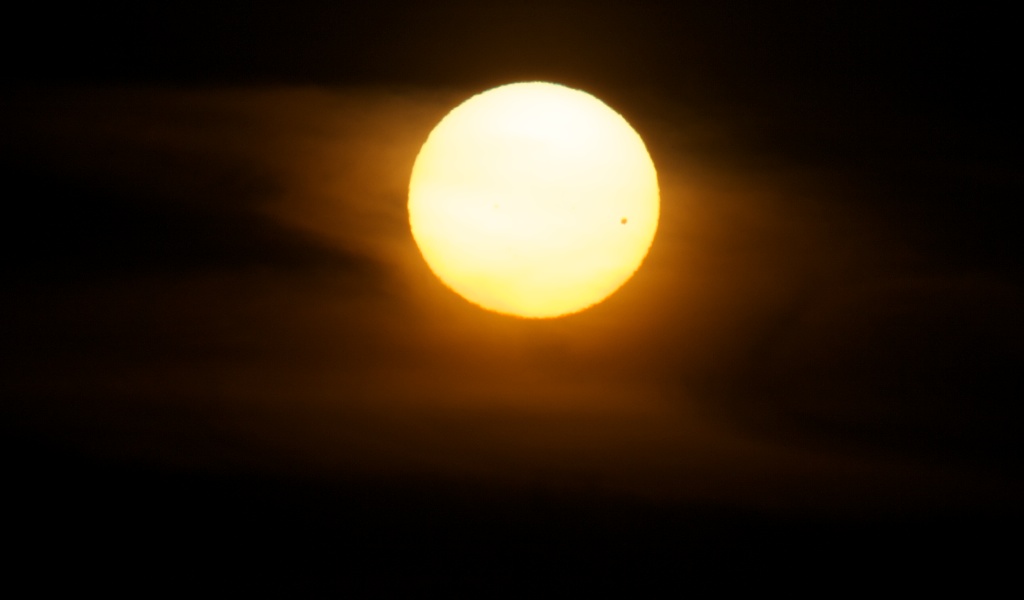
I knew that there would be lots of people taking pictures of the sun as little Venus crawled across its face, and I knew that I could never hope to match the pros. I decided instead to emphasize the surroundings of the shoot instead. I happen to live near a city with a distinctive skyline, so I thought I might try for a dramatic sunset that just happened to have the little black spot of Venus on the sun.

But where could I stand so that the sun would set right behind the Transamerica tower? I fretted over maps and even drove up the coast on an unsuccessful scouting mission, but in the end I discovered that the ruler tool in Google Earth made the job ridiculously simple. I knew the sun would set at 300° azimuth, so I just had to click on downtown San Francisco and draw a line at 120° over to the other side of the bay. The ideal spot was right at the end of the runway at Oakland International Airport. I didn’t quite get to the ideal spot, but darn close.

As you can see in the pics, I was not the only one who did the math. All that was left was for the gods of photography and those of meteorology to shake hands.

I had a problem with stupidity for a while; fortunately I got over it before the critical period. Also, nothing makes dirt on your sensor show up like shooting at really high f-stops. Should have cleaned diligently before a last-chance-in-this-lifetime photo op. There were light clouds on the horizon, so my dream shot was not to be, but as the sun passed through a gap just above rooftop-level I shot like crazy. In retrospect, I should have shot even more, and exposed some of them far less, to give Venus a chance. As it is, however, I got about sixty nice sunset shots to choose from for this gallery. Not bad for an evening’s work.

3

Building the Web of Trust – the First Baby Step

A few weeks ago I wrote about the way secure connections on the Web are set up and why the system as it stands is vulnerable to abuse — or total collapse. I’d like to spend a little time now devoted to specific things we can all do to make the Web safer for everyone. This attempt to turn the ocean liner before it hits the iceberg may well be futile, which will inevitably lead to governments being the guardians of (and privileged to) almost all our private conversations and transactions.

So, I have to try.

Security and privacy are related and a key tool for both is encryption. A piece of data is scrambled up and you need a special key (which is a huge number) to unscramble it. Modern systems use two keys, and when the data is scrambled with one, it can be unscrambled with the other.

When I get a message from Joe, I can use the public half of his pair of keys to unscramble it. If that works, then only someone who has Joe’s secret key could have sent the message. Joe has effectively “signed” the message and I can tell he wrote it and that it hasn’t been tampered with since.

The catch is, if someone gave me a bogus key and said it came from Joe, then all those messages that supposedly came from Joe actually came from someone else. These days most of the certificates (the files that contain the keys) out there are created and confirmed by a handful of companies and governments, and the software we use trusts these certificates implicitly. You are not even asked if you think Comodo is trustworthy, diligent, and none of its subsidiaries has been hacked (which happened), the decision has been made for you.

It is conceivable that we can replace this centralized authority system, but so far it’s not simple. Practically speaking, nothing big is going to change until things are much more obvious. Still, one of the first stepping-stones is in place, so we may as well get that part into common use, which would accelerate the rest of the process.

Here’s my thesis: With technology today, all emails should be signed, and any email to someone you know should also be encrypted. I look forward to the day I can reject all unsigned email, because it will be spam. As a side effect, jerssoftwarehut.com won’t get blacklisted in spam filters because some other company used that address in the “from” field of an email they sent. Email is fundamentally flawed, the big companies are too busy arguing about how to fix it, and it’s time to do it ourselves.

How do we get to this happy place? It’s actually pretty simple. It takes two steps: create a pair of keys for yourself and turn on S/MIME in your email program. If everyone did those things, the Internet world would be a much happier place. Plus, once we all have our keys, the next phase in revamping Web security, building the Web of Trust, will be much simpler (once the software manufacturers realize people actually want this — another reason we should all get our keys made).

If it’s so easy, why isn’t everyone doing it already?

All the major email programs support S/MIME, but they don’t seem to think that ordinary folks like you and me want it. All the documentation and tools are aimed at corporate IT guys and other techno-wizards.

I’m going to go through the process in general terms, then show specific steps for the operating system I know best. I borrowed from several articles which are listed at the bottom, but my process is a little different.

Step 1: Get your keys. Some of the big Certificate Authorities offer free keys, and while that route is probably easier and absolutely addresses our short-term goals, it does nothing to address the “what if the CA system breaks?” problem. So, for long-term benefits, and getting used to our new “I decide whom I trust” mentality, I recommend that we all generate our own certificates and leave the central authority out of it.

The catches in Step 1:

  1. It’s not obvious how one generates a key in the first place, gets it installed correctly, and copies the key to all their various devices.
    1. For Windows, it may depend on what software you use to read your email. Here’s an article for Mozilla (Firefox and Thunderbird): Installing an SMIME Certificate.
    2. For Mac, read onI’ll be publishing instructions soon.
  2. I’ve read (but not confirmed) that Thunderbird (the Mozilla email app) requires that certificates be signed by a CA.
    1. You can create your own CA – basically you just make your certificate so it says “Yeah, I’m a Certificate Authority”.
    2. If I know you personally, you can use my CA, which I created just yesterday for my own batch of certificates. If you’re interested let me know and I’ll tell you how. It’s pretty simple.
  3. When you generate your own keys, they won’t be automatically trusted by the world at large. That’s the point. The people you interact with will have to decide whether to trust your certificate. In the near term, this could be a hassle. It’s something people just haven’t had to deal with before. You can:
    1. Educate them, get them on board, and not worry too much if people get an “untrusted signature” message and don’t know what to do about it. That way they’ll at least notice there’s a signature at all.

For all those catches, there’s an alternative: go back to using a trusted Certificate Authority like Comodo to generate your certificate, and at least get used to signing and encrypting everything. Maybe later you can switch to a self-signed certificate.

Ironically, in the case of these free certificates from the big companies, they’re probably less trustworthy than one you generate yourself. All the CA confirms is that they sent the cert to the associated email address after they made it. But, our software trusts them for better or worse, and if that makes adoption of secure communication happen faster, then I’m good with that.

The catches in Step 2:
Really, there aren’t any. Somewhere in the preferences of your email reader you can turn on S/MIME (on Mac, installing your certificate seems to do that). You can probably set it to sign everything — and you should. The next step is to learn how to interact with the signed messages you receive. Do you trust the signature? (Don’t take this lightly – if possible confirm the email you got through another means. You only have to do this once.) If so, you can tell your computer and it will save your friend’s public key. Now you can send an encrypted message back to that person, and they’ll be able to trust your key, too. Between you two, you’ll never have to think about it again. Your communications will simply be secure, with no added effort at all.

Note:
I intended to put the step-by-step instructions for Mac here, but it’s a beautiful Sunday afternoon and even though I’m sitting outside, I have the urge to go do something besides type technical stuff into a computer, prepare a list of references, and all that stuff. So, that will have to wait a day or two. It’s time to let this episode run free!

1

Pretty Sure the Cyberspace Open is Dead

It’s too bad; the contest had a lot going for it. One of those things that worked great in theory but not in practice. It’s easy to calculate the cash the organizers reaped (rather a lot), but even though the contest was about meeting deadlines, they could not hit their own.

I once ran a contest at writing.com, and as with Cyberspace Open, I promised a thoughtful review to each entrant. Let me tell you, that’s not trivial. Though my reviews were much more detailed, I still only had to do a few of them, and it took forever.

I bitched about the contest even as I participated, but I’m sorry to see it gone. It really was a fun challenge that helped me develop as a writer.

Cyberspace Open had a good run for a few years, before getting crushed by its own popularity. The organizers then added a new marketing element—they got mediocre actors to read the top three entries and let the public vote. Perhaps the contest was already doomed, but that killed it sure. That, and a failure to enforce adherence to their own rules.

I miss the contest. It was right for me. Should it come back, I’d jump in in a heartbeat.

2

Howdy, Neighbor!

As the Information Age plunges on, we find the definition of “neighbor” changing. We have our geographic neighbors, but more and more our closest neighbors are people who might be thousands of miles away. It’s kind of cool.

One of the great things about neighbors is that they watch out for you. When bad things happen, your neighbors are there to help. The people who live near my house seem like a good bunch; ol’ George sits at the top of the list (based on charisma) but Lois is not far behind. If they need a hand I’ll give it, no questions asked.

I’d like to extend that to my online neighbors. I have a big-ass hard drive (well, medium-ass) and I can back you up. CrashPlan makes it easy and it’s free. Your data will be strongly encrypted so I can never figure out what it is I’m backing up for you. But if a meteor (or a power surge) strikes your home, at least your data will be safe.

Don’t think too hard about this. Just say, “Yeah, Jer, I wouldn’t mind having my most important stuff backed up outside these walls.” There’s really no reason not to.

1

I’m Not Making This Up

So I sent my fourth tweet ever today. While I had my tweeting-software fired up I noticed that the Calgary Flames were selling used equipment. I perused the list, and there are a few interesting things there. But nothing that matches THIS:

Ferland Goalie Jock @$39.99
Size: SR
Uniform/Color: N/A
Used/New: Used
Final Cost:$20
Quantity: 1

Remember, those are Canadian dollars, so it’s an even better bargain!

1

Gone is the Village, and the Hero Thereof

As I write this, I’m watching a girl in hot-pink ice skates take instruction from a portly woman who moves like she never takes her skates off. The girl is doing well, arms held so, feet working the drills, and my instant assessment is that this kid can be pretty good.

But, honestly, not great. I hope she’s in the whole figure-skating game for the right reasons: because she loves the challenge, the discipline, and feels great when she gets the toe-thingie just right.

Once upon a time (was it Vonnegut who first pointed this out to me? Maybe. Probably not.) a pretty-good singer could be the pride of a village. “She has the voice of a nightingale,” her neighbors would say. They would ask her to sing at all the village events, and she would, without any compensation beyond the appreciation of her friends.

It was electricity that broke this relationship. Curse that devil’s magic! The villagers could hear the broadcast from New York, then buy records, and before long our village chanteuse is being compared to the best in the whole damn world.

But it didn’t end there, especially in sport. First there’s a tournament in town. The winner of that goes on to face the winners in the nearby towns. That winner goes on to face a group from farther away. Somewhere on this sleigh-ride our hero loses. All the heroes lose but one, out of thousands. Tens of thousands. “He lost at regionals.” “She lost at state.”

OK, that’s an exaggeration, there’s plenty of celebration when a local athlete gets to state. But as the world gets smaller we just can’t let someone be a local champion.

And so, back to the girl on the pink skates. She’s working hard, dong things slowly that seem like they’d be easier fast. I hope she’s having fun. (I think back to trumpet lessons when I was a kid. I wanted to be good, but honestly the lessons weren’t fun. That’s about me, not the teacher. I wasn’t hungry.) I hope there’s a village where Miss Pink-Skates can be the best, but even if there isn’t, that’s not a disaster. The worst part about being the best in the village is the sudden arrival of the world outside.

1

Idly Pondering Redesign

I was staring blankly at my blog earlier and I thought maybe it’s time to redo the banner. I decided to mention my musings here on the off chance that someone out there cares at all, and has ideas I could mooch. Weighing the good and the bad of the current banner:

  • things move and fade in
  • there's a new haiku every fifteen seconds
  • there's a theme song for the clicking
  • it breaks out of its box
  • never got that wow factor
  • stylistically all over the place
  • Flash - doesn't work everywhere

The last one is the biggie. Flash does not now and never will work on some mobile devices. The number of devices where Flash works is declining now that Microsoft has decided to give up on Flash as well. So… time to move on. Eventually.

One impediment: I don’t know what I want the new header to look like. Something geeky. Gears turning? That would be cool, and could fall back to static gears on older browsers. Maybe some kind of machine that spits out the haiku? Or does a duck poop them out? What should the typesetting look like? How should it reveal?

Maybe a way to pop up a form and submit new guest poems?

Should there be an elevator? An ocelot? A rutabaga?

Frankly, I’m completely stumped.

These sorts of solicitations haven’t met with much response in the past, but if anyone out there has thoughts on the whole design thing, I’d love to hear them.

The Suburban Dream

Three Home Depot visits into home ownership finds me on the back patio, a dog at my side, a fine beer next to my laptop on the glass-topped patio “dining table”. The umbrella is deployed for the first time and is doing its job admirably; my laptop screen is plenty bright enough and WiFi signal is strong. Across from me is my fancy new grill, just waiting for propane. To my left I see the new little push-mower and other garden tools.

My sweetie is around front right now; she spent yesterday pulling out some of the old landscaping to replace it with stuff more our style. Today’s Home Depot visit was to pick out the first wave of colorful flora for the front bed.

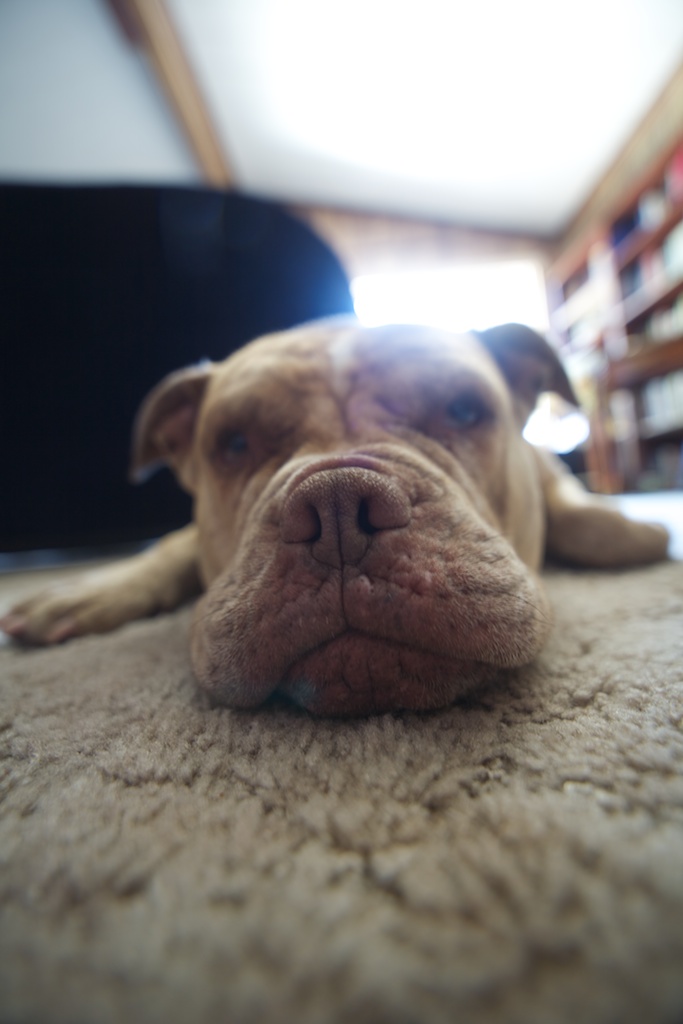
The Round Mound of Hound has forsaken my side to find a sunny patch of grass to lounge in. She seems pretty content.

This is pretty good.

2

Round Mound of Hound… Rebound

Sad news for fans of the Official Muddled Dog: We’ve been busted. You see, the ol’ gal is substantially larger than the nominal limit for our neighborhood. Even at her ideal weight she would be quite a bit too big.

The rule is very inconsistently enforced, however; so as long as no one complains, management is willing to not see the big dog. Well, we’re getting new neighbors and before they moved in they complained. Management has notified us that our quiet, gentle, well-behaved dog must go.

Looking for a home, once again.

To my new neighbors I say, “The next time your &*$#^*@ fence is on fire, there won’t be a dog around to alert people to the trouble.” (True fact: OMD raised the alarm a few days ago when a fence was burning. Just like in Reader’s Digest.) But, I remind myself, we were the ones breaking a rule, we knew we were breaking it, and the neighbors have every right to be jerks and rat on our dog before talking to us. They don’t know us, they don’t know how we would react. The era of neighborliness is sadly over. How long ago was it that when something bothered a neighbor they just went and knocked on the door before calling in higher authority?

Now there’s someone who’s bed is maybe thirty feet from mine, whom I’ve never met, that has pissed me off. Part of me wants to get a new dog that fits the regulations and barks nonstop.

But that’s not constructive. What is constructive is helping to find this fine animal her permanent home. Apparently our role in her life is an interim stop between old and new homes, so we can make sure she lands in a good place.

Please, especially if you’re in the Bay Area, put the word out that there’s eighty pounds of unconditional love just looking for someone who needs her.

It’s going to be really tough to say goodbye.

Pop Quiz

You have a pile of chips and a bowl of guacamole. You’re hungry. Life is pretty good.

Except… there are about three times as many chips as the bowl of guac can support at ideal dip levels. Don’t forget, you’re hungry. Do you:

  • Enjoy chips with ideal guacamole levels while it lasts, then eat the rest of the chips dry
  • OR
  • Stretch the guacamole to make every bite a little better than a dry chip

No going Kobayashi Maru here and ordering more guacamole.

A Quick Tip for Would-Be Hockey Goalies

If you follow hockey at all, you’ve heard of the five-hole. It’s the space between a hockey goalkeeper’s legs, and it’s a popular place to shoot at.

All NHL goalies that I know of use the ‘butterfly‘, a ligament-stretching move in which the knees are pushed together and the lower legs are parallel to the ice, forming a solid barrier to any pucks skidding along the surface. Why shoot for the five-hole, then, when it is so easily turned into an impenetrable wall? It’s all about time.

When a player slaps the puck toward the net, the time it takes a goaltender to close the hole is limited by the acceleration of gravity. Even after he recognizes the threat his body must fall into position, and no amount of strength or conditioning can make it happen faster.

I just watched in slow motion as the Rangers goaltender let a puck through his five-hole, and I had to cringe. You see, a lot of five-hole goals are preventable, and pretty easily, too. As the goalie collapsed into position, his stick was off to the side, pointing directly at the shooter, and completely useless. Had he simply kept his stick in front of him as he went into the butterfly, the goal would have bounced harmlessly away. His sloppiness might mean his team will not compete for the Stanley cup this year.

This failing is frightfully common. I often see keepers lift their sticks as they move down, and while that will get their legs into position a couple of milliseconds earlier, they lose their most important interim defense. It is a completely natural reaction to throw your arms up to get your body down faster. Don’t do that!

So, kids who want to be the next great net minder, when you’re practicing dropping into the butterfly long into the night (you are practicing long into the night, right?), always, always have your stick and always keep it in position. Watch video of yourself or have someone watch your stick as you work, and watch your GAA go down. I don’t think there’s any more easily correctable habit in all of hockey that can make such a difference.

More is Better

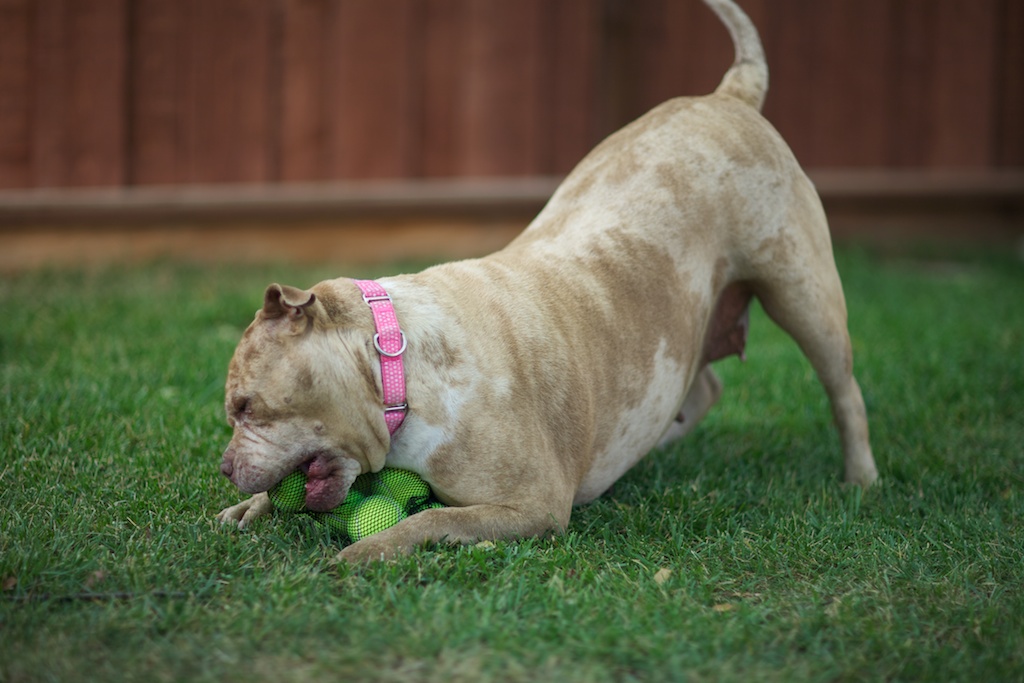
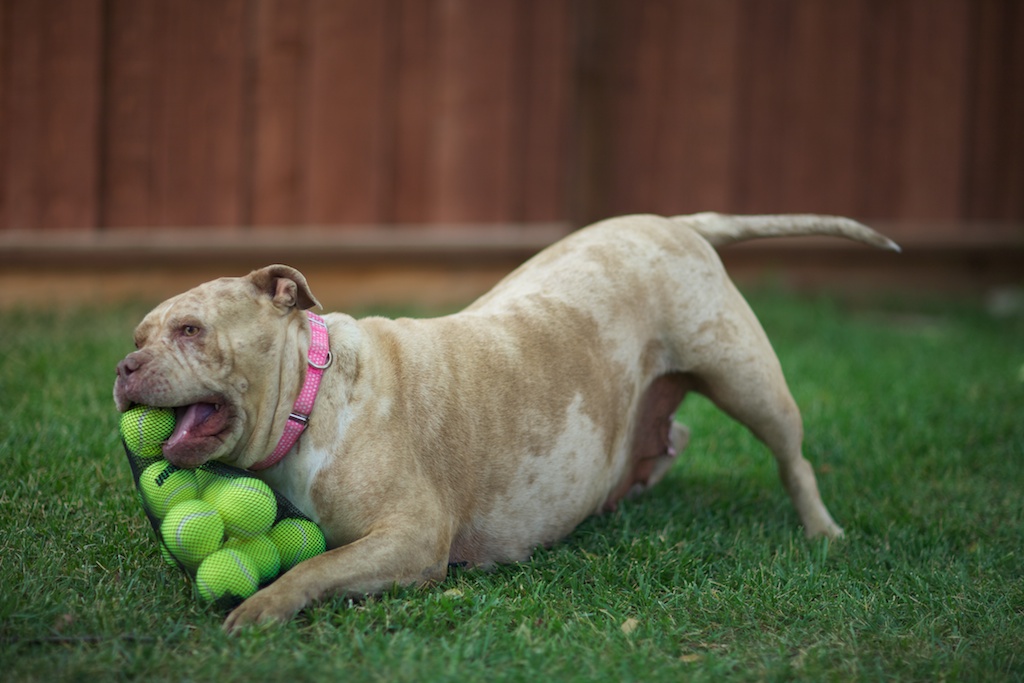
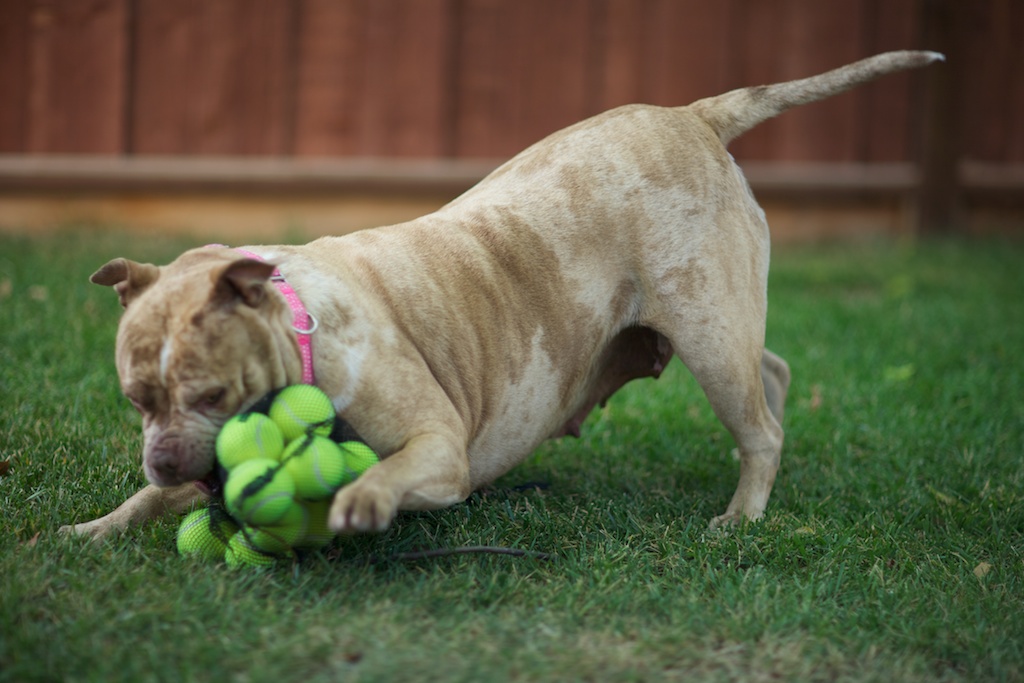
In the Official Muddled Dog’s mind, there are three things more awesome than anything else. Food, belly rubs, and tennis balls. I don’t know who invented the modern tennis ball, but if dogs had a museum his statue would be out front. As any tennis player will tell you, however, it’s only a matter of time before a tennis ball is nothing more than a tattered pile of rubber fragments and colored fuzz. It pays, therefore, to buy in bulk.

My sweetie came home from Tennis Balls R Us yesterday with a 12-pack of the fuzzy toys and OMD did not need any prompting to claim the entire bag for herself. Hilarity (and pictures) ensued.

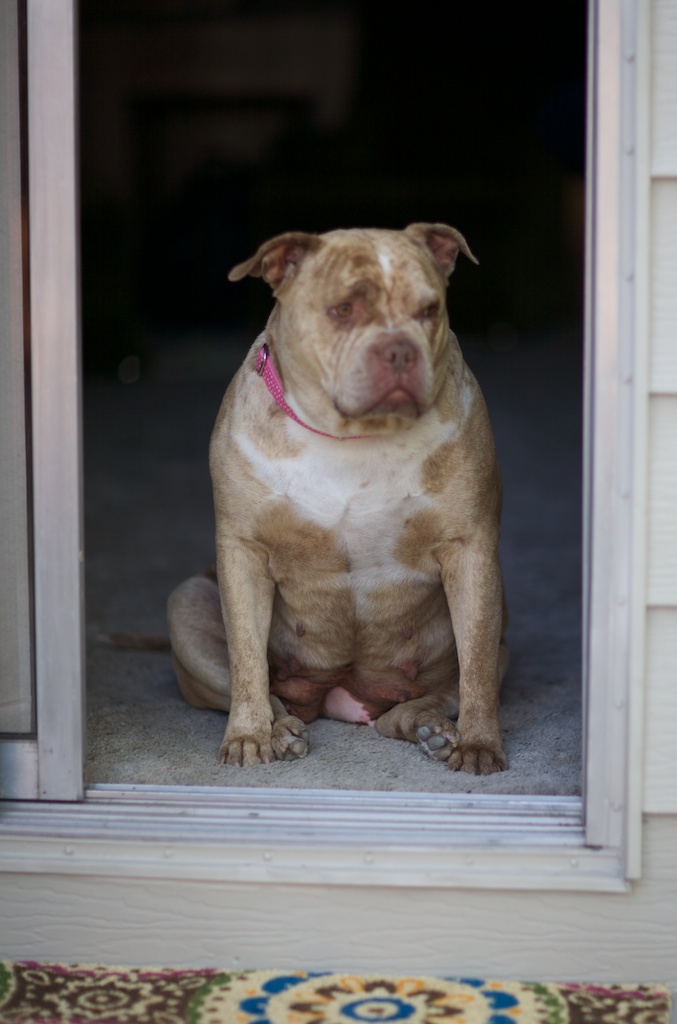
My sister asked if Official Muddled Dog had any positions besides “prone”. I’m happy to answer yes, as long as there’s a tennis ball around. The third shot of the set demonstrates that maybe shooting at f/1.2 isn’t always the right choice — could have used a bit more depth of focus there.

2

Penfinal?

I just received a document named “XXX_final_v2”.

4