This color is badass:
OK, actually it’s #bada55.
As I passed through Campbell park today, I wondered which was more depressing: that I was only halfway through my morning ride, or only a quarter of the way through my riding for the day. I seem to have misplaced a lung somewhere.
I bet it’s tire pressure. Yeah, that’s it. I got lazy and didn’t check it this morning.
On the other hand, I’m really glad I rode. It would only be worse if I waited until Monday. Next week: 90 miles! I can do it! (If I go slowly enough, that is…)
A few days ago I made a comment on a Facebook post that rather cheesed some Tesla drivers. I said zero emissions was a lie. (I also said that if Tesla made a convertible on their new platform, I’d buy it.)
I linked to an article here on my Blog about that lie, and about the even bigger lie concerning the emissions of gasoline-powered vehicles. Whether they read it or not before rebutting me is debatable, but I’m going to spend a little time comparing the two lies in a different way. My goal is to have the drivers of electric cars reject the zero-emissions label, and insist on a full reckoning of emissions for all vehicles.
Teslas come out looking pretty good in that comparison.
Let’s talk for a minute about gasoline. It comes from oil. Oil comes from the ground. Those rocking-horse pumps scattered around our nation run on electricity. How much? In California, the energy to pull enough crude from the ground to make a gallon of gasoline is about 17kWh[1]. That’s actually quite a bit. Enough to send a Tesla about 40 miles.
So while I’m standing next to a pump with a bucket full of smelly goo, my Tesla-driving friends are forty miles down the road, thinking that the day would be perfect if they could only put the top down. Meanwhile, my Leaf-driving friends are more like fifty miles down the road, and are made even happier because from inside they don’t have to look at their hideously ugly car.
Meanwhile, my bucket of goo has to be transported, refined (a very energy-intensive process), augmented with various chemicals, and transported again. By the time that gallon of gas reaches my tank, my Tesla friends could be well over 100 miles away, all for a similar amount of environmental harm.
Yet, up to this point, nothing has come out of my tail pipe. The tailpipe emissions from burning the gasoline are dwarfed by the environmental harm getting the gas into my tank. Optimistically 60% or more[2] of the energy consumed by a gas-powered car is not reflected in the tailpipe emissions.
“I had no idea!” you say! To which I say, “EXACTLY!” The numbers I cite aren’t easy to come by, and as long as all cars were gas-powered, the film-flam didn’t matter much. But now we have electrics, and tailpipe emissions are a terrible way to compare the two.
And we’re not even talking about babies dying as a result of fracking-related pollution, or the cost of keeping our oil coming in from other countries, or mitigating climate change. We are just comparing the energy consumed to drive a mile.
Taking into account the inefficiencies of power generation and the electric grid[3], ‘zero emissions’ hides the impact of generating about 1kWh for every mile a Tesla is driven. And it lets the gasoline junkies have it both ways. “Those electric guys ignore their own pollution!” they say, while simultaneously ignoring almost all their own emissions. Focusing on tailpipe emissions allows Miata drivers like me to ignore the impact of at least 3kWh for every mile driven. And that big-ass pick-em-up truck? It’s not pretty.
So come on, electrics! DEMAND an even reckoning. Mark your Tesla 30MPGe (due to the inefficiencies above), and insist that my Miata be rated at 8MPG[4]. Tops. Probably less. It’s a more honest number.
Even out the reckoning and watch your favorite electric vehicle flourish like never before. Say NO to ‘zero emissions’!
______
[1] State of California
[2] I backed these numbers way off from my previous post, as the sources I found back then have dried up, and 4-7kWh/gallon seems to be the consensus for electricity used in refining. That ignores very large amounts of fossil fuels (mostly natural gas) used alongside the electricity, but if the numbers are out there for that, I can’t find them anymore. Energy companies aren’t terribly motivated to make that easy to find.
Just know that I might be making things look way better for gasoline than they actually are. This is partially offset because I’m ignoring the other useful products of the refining process.
Updated to add: I tried, I really did, to get the answer from energy.gov. Unfortunately I could not make numbers that jive with other sources that seem trustworthy-ish, so I suspect my math and interpretation of the data are off. On the one hand, I came up with about 4.6 kWh/gallon strictly for the gasoline product of the refining process, much better than I expected. On the other hand, according to that document fossil fuels used in the energy mix during refining dwarf the electrical component, so if the electric estimates I use above are even remotely accurate, then my analysis of that PDF is way off. The latter seems more likely to me.
[4] Yeah, I know it will never happen. Both for political reasons and because the number varies wildly depending on where your gasoline comes from.
Let’s start with the guy driving the faded red pickup truck, tires caked with mud, a skull wearing a german helmet adorning the back window, mariachi music blasting into the heavy traffic. You know who you are.
Thank you.
You went out of your way to make my journey home safer — not once, but twice, protecting me not only from yourself but from other assholes as well. The world needs more folks like you.
As for the minivan driver and the woman driving the beat-up sedan, I’d like to thank you as well. Also the woman who waved me through the four-way stop.
Toward the end of my ride I realized how out of shape I was when I started hallucinating. I could have sworn the guy who slowed down way before he needed to, specifically to give me a safe space to pass a moving van parked in the bike lane some distance ahead, and who leaned over to make eye contact with me and wave me ahead, a kind and courteous gentleman, was driving a big, shiny, new BMW.
But that’s just not possible, is it?
Still, hallucinations aside, it was a good ride home, and I’d like to thank all the courteous drivers out there who made it happen. I hope to see you all again soon.
… is patrons.
And macaroni and cheese, but that’s been covered already.
While I’m at it, thanks for all the well-wishes sent my way via various social media and even good old-fashioned email. I now have a pirate song sung by dogs stuck in my head. The song said I was supposed to drink beer; I better get on that.

I first saw your work as a dup-of-a-dup-of-a-dup video of Spirit of Christmas. Sweeet. What would Brian Boitano do? Since then, you’ve managed to make a pretty big name for yourselves. You now have a chance to become legendary.
One of the things that makes your show a hit is your ability to respond to events in a very short time. When the world is being stupid, you are there to mock it.
According to the internet, there will be no new episodes of South Park ready to go until September. That’s cool. I respect that as artists you need time to step back from the cash cow and maybe make another broadway hit musical.
But.
Were I you, I’d have my animators standing by. The major party national conventions are coming up, and chances are things will happen that you will have a take on. The fact you have no planned episodes is perfect.
After the Republican national convention, announce that you have created a special out-of-season episode. The network will happily find a place for you, and the ratings will blow out the roof, as people gobble up your take on the whole dog and pony show. When the Democratic National Convention comes round, play it coy, get people all lathered up accusing you of being partisan for not mocking the Democrats, and then do a Mr. Hankey episode to tidal wave ratings, followed by tidal wave anger.
You guys are in a position to define a new realm in political satire. Don’t let me down.
WordPress updates can be pretty insecure. FTP was invented back before there was an Internet, and when when no one thought that bad people might be on the same network you’re using (why even have a password if you let everyone see it?). Ah, for those naïve and simple times!
Yet even today most of the Web-site-in-a-box products you can get to run on your GoDaddy account use FTP. I control my own server, and you can bet your boots that FTP is turned right the hell off.
It can be a hassle setting WordPress up to allow its update features to work in a very secure fashion, however. I was wrangling rsa certificates when I ran across another solution: rather than push a button on a web page to run an update, log into the server and run a command there. Simple, effective, secure, without file permission fiddling and authorized_keys files.
wp-cli does way more than updates, too. It is a tool I’ve been pining for for a long time, without even knowing it. Want to install a plugin? wp plugin install "xyz" and you’re done. Back up the ol’ database? They have you covered. Welcome to my tool belt, wp-cli!
If you’re not afraid to type three commands to update your site, rather than trying to maintain a hole in your security in such a way that only you can use it, then this is a great option for you. Check it out at wp-cli.org.
Luckily for my productivity this afternoon, the Facebook page-loading feature was not working for me. I’d get two or three articles and that was it. But when it comes to wasting time, I am relentless. I decided to do a little digging and figure out why the content loader was failing. Since I spend a few hours every day debugging Web applications, I figured I could get to the bottom of things pretty quickly.
First thing to do: check the console in the debugger tools to see what sort of messages are popping up. I opened up the console, but rather than lines of informative output, I saw this:
Stop!
This is a browser feature intended for developers. If someone told you to copy-paste something here to enable a Facebook feature or “hack” someone’s account, it is a scam and will give them access to your Facebook account.
See https://www.facebook.com/selfxss for more information.
It is quite possible that most major social media sites have a warning like this, and all of them should. A huge percentage of successful “hacks” into people’s systems are more about social engineering than about actual code, and this is no exception. The console is, as the message above states, for people who know what they are doing. It allows developers to fiddle with the site they are working on, and even allows them to directly load code that the browser’s security rules would normally never allow.
These tools are built right into the browsers, and with a small effort anyone can access them. It would seem that unscrupulous individuals (aka assholes) are convincing less-sophisticated users to paste in code that compromises their Facebook accounts, perhaps just as they were hoping to hack someone else’s account.
I use the developer tools every day. I even use them on other people’s sites to track down errors or to see how they did something. Yet it never occurred to me that I could send out an important-sounding email and get people to drop their pants by using features built right into their browsers.
It’s just that sort of blindness that leads to new exploits showing up all the time, and the only cure for the blindness is to have lots of people look at features from lots of different perspectives. Once upon a time Microsoft built all sorts of automation features into Office that turned out to be a security disaster. From a business standpoint, they were great features. But no one thought, “you know, the ability to embed code that talks to your operating system directly into a Word doc is pretty much the definition of a Trojan Horse.”
So, FIRST, if anyone asks you to paste code into the developer’s console of your browser, don’t. SECOND, if you are in charge of a site that stores people’s personal data, consider a warning similar to Facebook’s. Heck, I doubt they’d complain if you straight-up copied it, link and all. THIRD, just… be skeptical. If someone wants you to do something you don’t really understand, don’t do it, no matter how important and urgent the request sounds. In fact, the more urgent the problem sounds, the more certain you can be that you are dealing with a criminal.
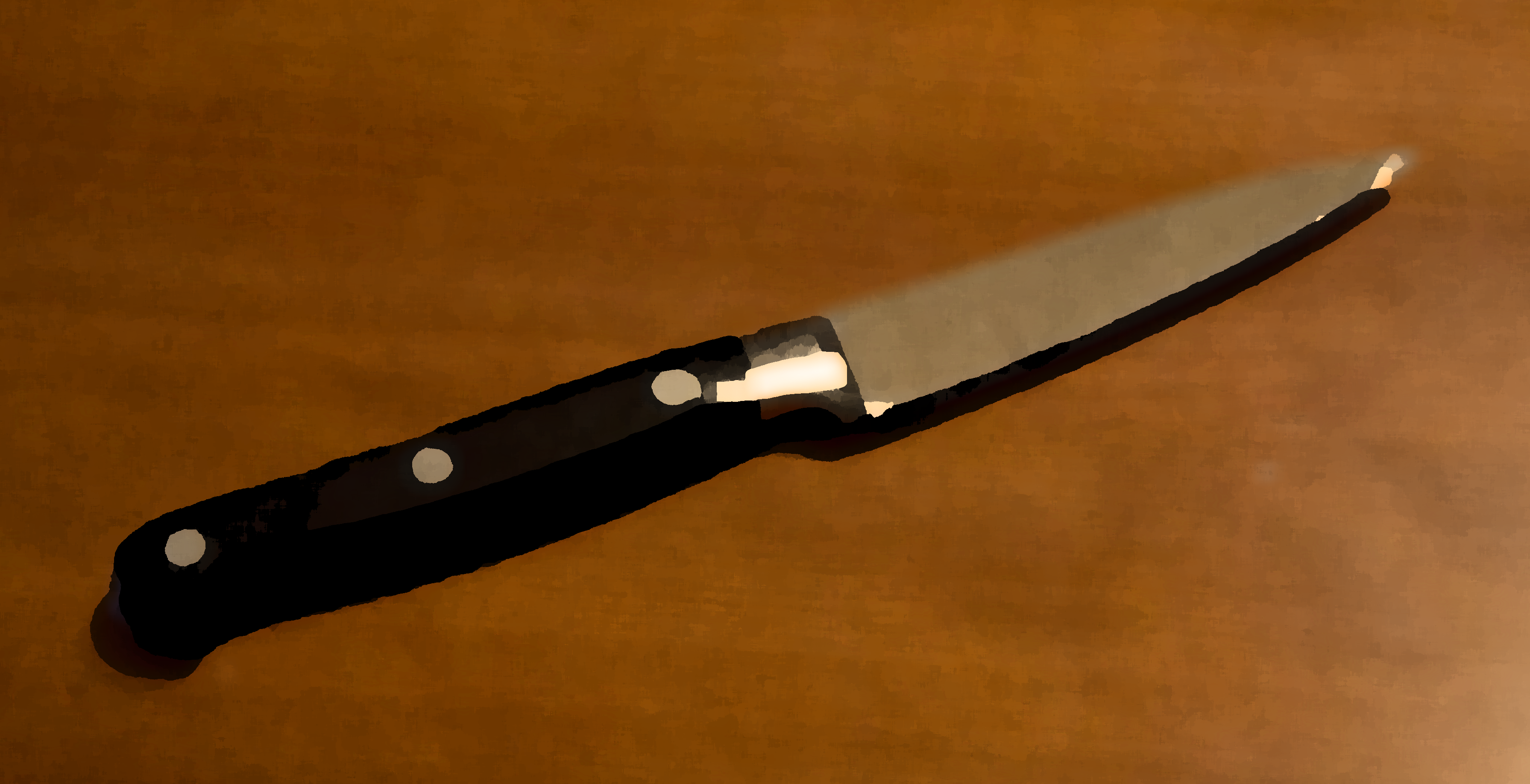
Knives, my serialized fantasy story, is now officially launched! Woo! You can visit over at its swanky new digs. For those of you unfamiliar with the genesis of this story, it started as a fun little project called The Fantasy Novel I Will Likely Never Write, but two things happened: People started clamoring for more (yes, clamoring), and I was having a ton of fun writing it. So those first few chapters of dubious quality gave way to richer, better-written ones, and it began to look like TFNIWLNW was not a very good name for the project.
I have spruced up the first few chapters and put them in a new home, all on their own, so people can enjoy the story without being distracted by all the goings-on over here at Muddled Ramblings and Half-Baked Ideas. That turned out to be rather more time-consuming than I had banked on, so those who clamored have, ironically, had a long wait.
In fact, the clamorists still have a bit of waiting to do, as I upgrade the first chapters from light first drafts to richer second drafts. But here’s where you can help! You see, there’s a lot of things competing for my time, and the one way to make sure Knives remains a vibrant story is to put beer in my refrigerator. You, my good friends, can become patrons of the arts.
Please go visit the new site, and give a read. If you like it, click that Patreon button and pledge a wee bit per chapter. When certain goals are met, new chapters will come out. Plus, patrons will (eventually) get some modestly cool extras for their eyes only. Still working on setting that up.
Go, read, enjoy. It gets violent, and there’s a teenage girl who is gleeful with her profanity, so Knives is not for everyone. But I’ve got chapter seventeen champing at the bit to rush out and greet the world, but, like a younger daughter, she can’t get married until the elders are all taken care of.
Hm. Not my best metaphor stew. But you get the idea.
And to those already supporting the story, please, spread the word! Help me get to the targets that will free the next chapters!
It showed up in my Facebook feed the other day: “Co-author a book with James Patterson!” That got my attention; although many of Patterson’s co-authors are really, really bad at their craft, you have to figure that the exposure and automatic best-seller listing have to be good for a career. Even the abysmally horrible Michael Ledwidge now has twenty listings over at Amazon (all with Patterson’s name on them as well), and I have to figure he’s doing pretty well for himself.

The man, the myth
Patterson (if he’s not being held in a cryogenic cylinder by his agents while they squeeze every last dime out of his name) seems all right with putting his name on horrible books. For that reason I’ll never pay for anything with his name on it.
But would I co-write a book with his name on it? Hell yeah! I’ve got something that would knock his socks off. It doesn’t quite fit his cookie cutter (more on that shortly), but it’s close enough to pitch.
So, knowing I was just encouraging the man, I clicked the link. The contest is open only to those who take his “Master Class” — a series of videos that costs $90. I am being asked to pay $90 to learn from the man who theoretically mentored Michael Ledwidge. Yikes. But I’m sure a lot of people will fork over their precious cash (even more precious to working writers) to chase the dream of seeing their names on the cover of a best-seller. Hell, someone is going to win, and that someone will likely produce a better novel than Step on a Crack.
Even if you don’t win, your idea might make the big-time; here’s some fine print: They can “use the content, including without limitation, the right and license to make, use, sell, offer for sale, and import any products and/or services which practice or embody, or are configured for use in practicing, all or any portion of the content…. without permission from or compensation to you or any other person.”
(Thanks, Trent, for digging that up.)
So now people are paying $90 to hand over their ideas to a bankrupt franchise. Now, that’s not as evil as it sounds. I sometimes quip (in reference to novels), “Ideas aren’t worth the paper they’re wiped on.” Novel writing is about execution. But if I saw my main character in a Patterson novel written by some (other) hack, it would tear my guts out.
I will not be participating. But I understand if other folks cannot resist the siren call. Even after that analysis, I feel the pull. It is a magnificent prize. I’d like to give those who participate a couple of tips on how to succeed. You don’t have to thank me, it’s what I do.
1) The hero is everything. He is a man. He is unbelievably awesome, yet single. In my very small sample, I have seen a cop, a father of many, watch his beloved wife succumb to cancer in the first book of a series, leaving him in need of a Good Woman, and I’ve seen a war hero who was resuscitated from death on a battlefield only to stand up and fail to rescue his buddies in a burning helicopter. I’m amazed there were no kittens on the helicopter to make the events more tragic.
So, your hero. Tough. Smart. Resourceful. Really feeling a hole in his life where a Good Woman should be.
2) That tough, smart part? Well… he doesn’t actually have to be smart; if you just say he is, that’s good enough. Somewhere in chapter two have a buddy give him shit about his physics degree and the patents he holds, and you’re good for a while. In fact…
3) The good guy can actually be pretty stupid. If he has to swallow his brain to make a scene work, no biggie.
4) Now let’s get to the bad guy. Great thrillers are built on the power of the adversary more than on the strength of the hero. On an unrelated note, in Patterson-plus-one novels a bad guy is handy. The bad guy must commit ALL the classic bad-guy mistakes:
a) create an incredibly intricate plan
b) base their incredibly intricate plan on the incompetence of the good guys
c) after that succeeds, make a really stupid mistake
d) [optional] escalate the threat as the hero gets close
e) refuse a pragmatic way to win in favor of a poetic gesture
f) confess to everything when caught
5) I’m sure I left out a couple, but I need to move on. The bad guy must be one of the smartest people on Earth. Only, as above, you only have to say he is a criminal mastermind; he’s not exactly facing Encyclopedia Brown, here, you know what I mean? Encyclopedia Brown would break the story.
5a) Encyclopedia Brown as a down-and-out detective, bloodied by life yet still standing. CALL MY AGENT!
6) The Good Woman. She’s hanging around the periphery, noticed-but-not-that-way by the hero. Maybe in the next book he’ll see what’s right in front of him. Maybe in the book after that. Treat her well, she is the avatar of the woman reading your yarn. Your contract as a writer is with her. She is, despite limited exposure, the most important character in your story. She is competent, understanding, always there to wash the blood off the hero’s face and look after the orphans he adopted for some reason. When he comes home drunk she is there (having just put the orphans to bed) and she pours coffee into him and listens to him and feels for him.
Someday, she knows, someday he will open his eyes.
7) The Bitch. Everything the reader doesn’t like about her co-workers rolled into one. Sexy, manipulative, only out for herself. In one of the Patterson stories I read, the writer couldn’t even be bothered to make her a problem. She was a bitch, then she felt bad about it and disappeared. Christ I think that lump of poo was written over a weekend. But if you want to shine in the Patterson fold, give the bitch some teeth.
To circle back to the title of this episode: the best way to win is to not play. But if you must play, remember that there is a formula for success. And remember also that you can write to a formula and still be good. Hell, many of my favorite stories are formulaic. So don’t let that stop you. But you actually have to write a good story. That’s the lesson Ledwidge never learned, despite the stature of his mentor.
Where I’m sitting right now, I can see the row of vinyl anchoring our bookshelves. Some great stuff in there.
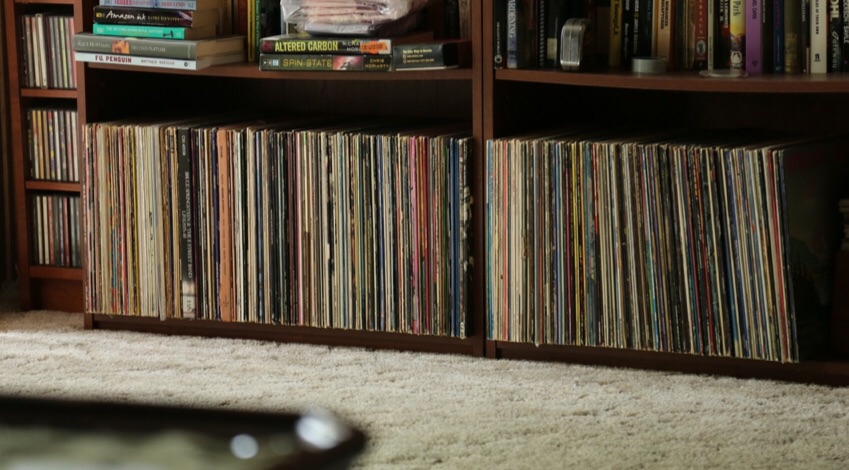
All lined up with no place to play.
If I had a slot-loading turntable, I’d be good to go. I did a brief search for such a thing, and apparently they exist for 45’s, but the only one I found that might work for LPs was a dead link. But with today’s entertainment furniture, it seems like a no-brainer.
While we’re at it, perhaps we could replace the needle with a laser, and extend the lives of our precious vinyl albums.
I’ve got a bold new venture in serial fiction kicking up, and I’m facing the simple reality that pictures sell. I can’t draw worth a lick, but I do take pictures and could possibly even shoot video. The thing is, I’m completely stumped about how to take pictures that support the particular story I’ll be flogging. I suppose I could put friends in costume and head out to the woods for a shoot, and then photoshop the crap out of the results to make it look less photographic, but…
There’s got to be a better way! As someone who claims to be creative, I have to admit I’m totally stumped by this one. Maybe I’ll just put the fish-eye lens on the camera and take close-ups of my little dog. Nothing to do with the story, but people love that stuff.
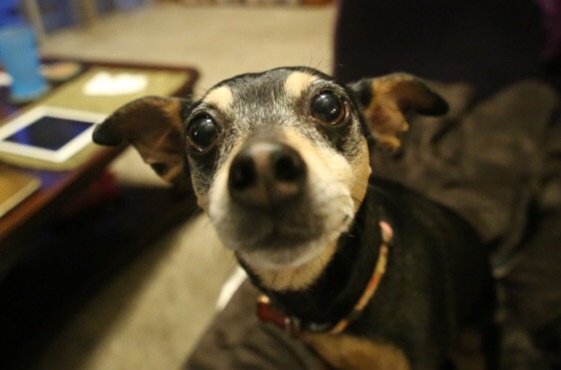
My Little Clickbait
Well, it’s time, I think, to introduce Knives, the serial fiction project formerly known as The Fantasy Novel I’ll Likely Never Write. It has its own place now, knives-the-novel.net, where you can see the first five (improved) episodes.
At this time, I would appreciate a few people checking it out, and letting me know what they think of the organization, the theme, and the experience in general. Please leave your comments here on Muddled Ramblings and Half-Baked Ideas — finding a good discussion forum for Knives remains stubbornly on the incomplete list.
Also, I would be Super-Duper grateful if a couple of folks who are so inclined could report back on the Patreon Experience. Of course that means pledging support for the story; I sincerely hope some of the regulars here see fit to toss a bit into the tip jar.
Once I work the kinks out of the system, I will be exhorting you all to spread the word about Knives, but for now, let’s keep things modest.
And, once more, faithful readers, thank you!
