My Goofy Dog

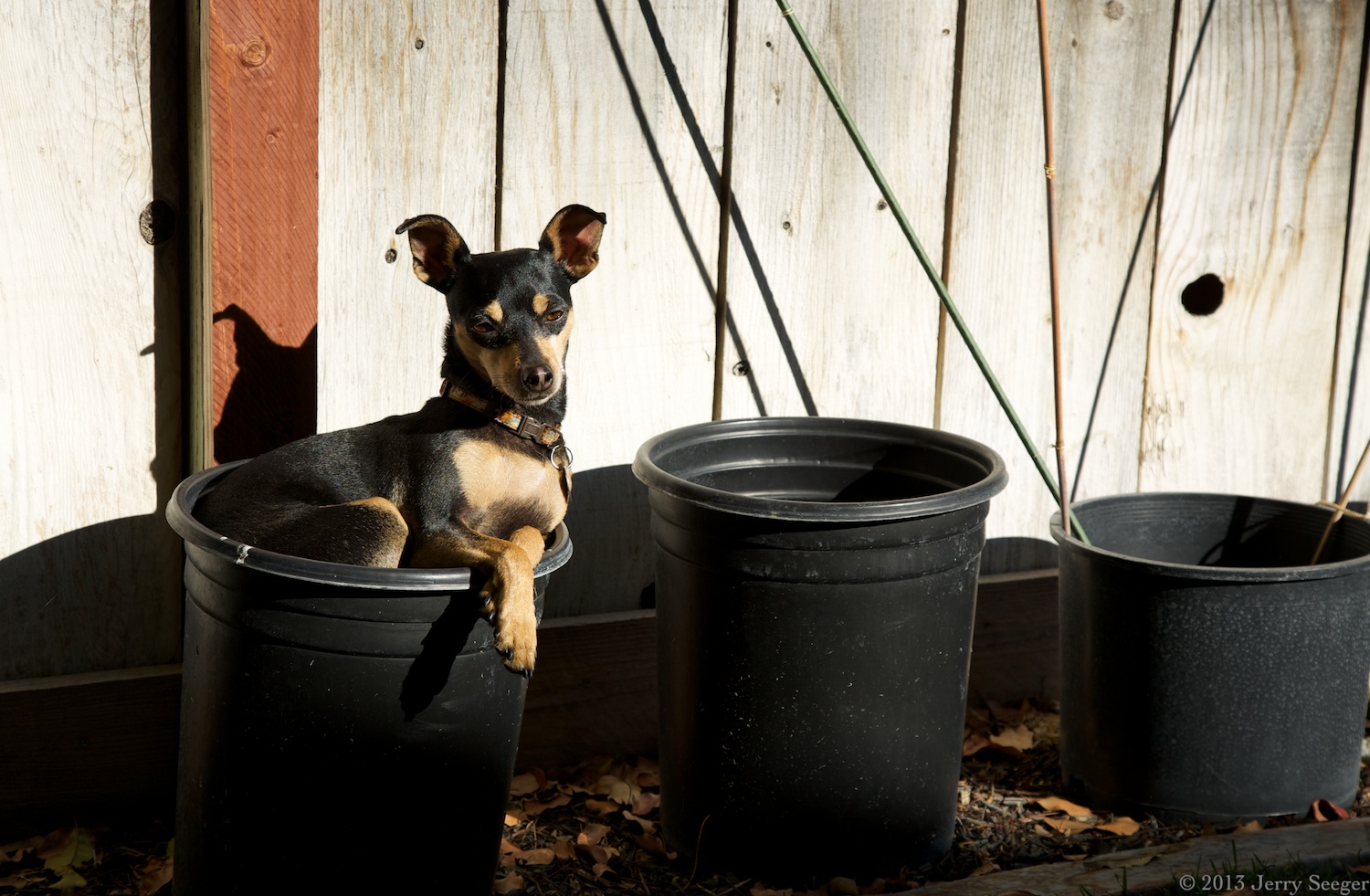
This has become one of Lady Byng’s favorite places to hang out:

Pot dog!

Lady Byng, hanging out in the back yard.


Yep, she’s a pot dog! (Yeah, I know, sorry. I had to do that.) This behavior seems pretty strange until you realize one thing: There’s only one place with sunshine in the whole back yard right now, and if Byng’s going to have to climb into a flower pot to find that sunbeam then by jing that’s what she’s going to do.

1

Different Planet, Same Sky

As I try desperately (and occasionally despairingly) to cross the 50,000-word mark for the thirteenth year, I’ve been pondering the world my story takes place in, and the following question: Is this our Earth or some other Earth? How many stories have you read that take place on a world with completely different geography, but the same moon as ours? Is it Earth or not?

My story takes place on a world that has been blasted to ruin. The civilization before the cataclysm was very different from our own (at least on the surface), but there’s that big ol’ moon lighting the way for Wolf and Joe as they cross the wasteland. Is that riverbed the former course of the Rio Grande? The Vltava? The Nile? Or is this some otherworld that just happens to have a big, fat moon like ours?

Or maybe I should just stop thinking so much and get to typing. I have a lot of words to go.

Parking Postits

I’d like to have a set of post-it-style notes printed up, with a variety of messages for a variety of parking situations. Some of the messages might include:

  • By what definition could this vehicle possibly be considered a compact?
  • This is a nice car! It would be a shame if it was damaged because you never learned to park. Just sayin’.
  • One slot per car, asshole.
  • I don’t care if the Amazon Kindle team is packed into way too small a space. That doesn’t mean you can use our parking garage.

The last one is fairly specific; and honestly if I were in charge I’d cut a deal with Amazon and lease them bottom level of our garage. The others, though, I think you can appreciate.

2

The Usual End-Of-Year Apple Reminder

If anyone out there I know is thinking about buying Apple stuff — we make computers and whatnot — I can get folks a modest discount. I get a set amount of discounts to hand out each year, so if no one uses these discounts by Dec 31st, *poof*, they are gone.

Friends don’t let friends by Apple gizmos for full price.

1

When Phones and Cars DO Mix

I’d heard whispers about it in the shadows, seen the knowing glances between those in the loop, and recently I’ve become one of them. I’m a Wazer.

I am required to be at an office during what we call ‘normal business hours’. That means I’m driving to my office in the morning and home from the office in the evening, along with all the other NBH drones. Some mornings, the 12-mile trip can take an hour. That’s not good.

Along my route are some key decision points. It’s shortest to turn left at Curtner, but that ramp onto the freeway can get massively backed up, to the tune of fifteen minutes. On those mornings it’s better to stay on the surface streets for an extra mile.

But which mornings? How can I tell in advance whether Curtner is a mess? Enter Waze, the social mapping service. Waze takes real-time data from drivers like me and finds the fastest route to work (and, perhaps more importantly, home again). Sometimes those routes use streets I never would have thought of, but I ignore the advice at my peril. (Monday, I thought I knew better than Waze. Boy was I wrong.)

Waze is a bit quirky; right now it tries to steer me around one intersection at all costs — including cutting through a cemetery as an alternative. I have no idea why it developed an allergy to that right turn, and I suppose a true Wazer would log in and fix the map. Even the maps themselves are crowdsourced. It’s pretty cool.

You should be aware, however, that Google just bought Waze for a cool 1.1 Billion, so as I drive I’m telling the Goog where I am. If you use Google maps you’re already doing that, however, and I think this is a case where a voluntary surrender of personal information (with a very short useful shelf-life) actually makes the world better. Perhaps I just think that way because I really hate traffic. I decline to advertise my location on Facebook, and I hope all you have more common sense than to do so.

Another very useful phone-related product I came across recently is actually a gadget/app combo. You may have read recently that I’ve been tinkering with my car so that it will pass the California emissions test. I made some repairs and pulled the fuse that powers the onboard computer and counted thirty seconds, which should reset it. Even if the Check Engine Light is off when I get to the smog place, if there are old error codes in the computer’s memory, I will fail. Again. I know this because that’s why I failed the first time. The Check Engine Light had been on, and that was enough.

So I cleared the computer. Probably. Maybe. After my first round of repairs the light came back on (I had broken a plastic bit during the first operation) so I made my second repair and pulled the fuse for 30 seconds. Once again, there was no way to tell if I had actually cleared the memory. Just in time, help arrived via the U.S. Mail.

You see, during this whole process I was frustrated that I couldn’t just check the damn computer myself. (Once you fail smog, all except a few specially-designated repair places aren’t even allowed to hook you up. Bah!) Then while reading a Miata forum I found a discussion of which OBD tools worked with 1999 Miatas. A light turned on over my head. I could buy my own damn code reader! That had quite truthfully never occurred to me. I went to Amazon and started looking around. There was one hitch that made me hesitate: Units were either a) really expensive; and/or b) not sure to work on my car. Although there is a standard connector, different cars communicate with different protocols. I didn’t want to spend a bunch of money for something that didn’t know my car’s dialect.

Then I came across one that was both cheaper than any of the others AND low-risk! BAM! For $21 bucks I bought the Elm327 WIFI OBD2 Car Scan Tool. There’s a cheaper BlueTooth version, but there was some indication that it might not work on all iOS devices. Why is this one more likely to work with my car? Here’s the thing: The gizmo doesn’t know diddle about protocols. That’s software. So if one phone or computer app can’t talk to my car, another will. And now the UI can be presented on a sophisticated touch-screen computing device, rather than a cryptic LCD readout with arrow buttons for controls.

When the ELM-327 arrived I splurged and got one of the most expensive apps available to talk to it, based on reviewers saying it worked no problem with their ELM-327’s. Ten bucks. For a total outlay of $31, I had a scan tool that not only worked far better than dedicated devices costing hundreds of dollars, it had a better UI, and could even display a host of real-time data as I drove around! Speed, rpm, air volume, battery voltage, and more. Some modern cars provide a ridiculous amount of information through the OBD port. The app I chose, OBD Fusion, can log data and even superimpose that info onto a map. Racers, apparently, love this stuff.

My smog guy was really impressed as well. He actually laughed when I revved my motor and the virtual tach needle swung upwards. He was excited that he could prescreen customers in the parking lot, quick and easy. I expect he owns one of these now.

And in fact I had not successfully cleared my computer by pulling the fuse, but with my gadget and my app I cleared the old codes and ran the car until all tests had come back green.

This tool is a game-changer for even an unsophisticated home mechanic like me. Knowing the code and being able to look up the repair on the Internet literally saved me hundreds of dollars. (I know because I once paid hundreds of dollars only to have the problem return a few months later.) It also confirmed that my speedometer is a wee bit off.

And next road trip I’m totally going to make a map of engine RPM along my route. Because the world needs to know stuff like that.

5

November 1, 2013

NaNoWriMo returns, and with it the public airing of my first night’s work. Thanks to all y’all who suggested ideas for me to write this year; it may or may not be obvious which one I chose from the following excerpt. Had a chat with my sweetie after I wrote this bit and I’ll be going back and inserting a fairly disturbing event, but here’s the first two chapters of what I did last night.

The usual disclaimers apply: I haven’t even reread this, so errors likely abound. I’m about to take this setting and try to turn it into a story, but so far I have no story in my head, just a regular superhuman guy and his daughter getting by in a harsh world.

The End

Chapter 1

By mutual consent they paused to rest beneath the tree that separated their dusty fields. Dot leaned the plow against the tree’s rough trunk while Joe shrugged out of the harness, sweat staining his tattered shirt where the straps had lain across his skin. Dot sat carefully, cradling her gravid belly with both hands. She sighed heavily, her cheeks puffing out, and closed her eyes. Beneath a sheen of sweat her face was gray. Her loose tunic blended with the bare earth between the tortured roots of the tree.

They didn’t talk about her sickness. There was a lot of things they didn’t talk about. The race between the malignancy that would destroy her and her unborn child. Who — or rather what — the father was.

Joe stretched his back, flexed his shoulders. On her side of the creek, the dirt was turned and ready for planting, the soil almost white in the unforgiving sun. On his side, stubble from the last crop limp and dry. Beyond the fields, nothing. Poisoned soil dotted with stumps and rocks, impossible to till. It had been a mighty forest, once.

He wondered why they were doing this. Plowing their fields, as if either of them would be around when harvest-time came.

“Water?” he asked.

“Yes, please.”

Joe stepped cautiously down the embankment to the edge of the stream. The water moved sluggishly, weighed down by green scum. The swarms of insects left him alone as opened the pouch on his waist and extracted his water kit. He put the fine mesh filter over one of the cups and scooped water with the other. It took two minutes or more to pour the water from the first cup through the filter and into the second, but there was no reason to hurry. There was never a reason to hurry anymore.

He took the water back to Dot. She drank it down in one go. Joe took the cup back from her and returned to the stream. When he got back, her eyes were closed. He put the water near her, but no so close she might knock it over by accident, and returned to the stream to refill his deerskin water bag.

Fifteen minutes later he returned to find her watching him with haunted eyes, her sandy-brown hair shifting with the listless breeze. He sat facing her, and took a sip.

“How are you going to feed her?” she asked.

Another thing they didn’t talk about. Not until now, apparently. Dot was certain her child was going to be a girl. Joe had no reason to doubt her.

“I’ll find a way,” he said. “Don’t worry.” As if he could say anything else.

She was staring at him now, and he was sure she was going to say something else. Something that demanded an honest response.

“Do you regret it?” she asked.

Joe thought for a while before answering. He almost didn’t answer at all. He wasn’t sure what she was referring to—probably the night they had slept together, after she had learned she was going to die. The night they had created a new life they had no means of sustaining. But she might have meant a thousand other things, large and small. “No,” he said, and it was mostly the truth. “Unless you mean the time I let you cut my hair.”

She smiled, showing gray teeth, then her face went slack again, as if exhausted by the effort. She made a listless effort to push a stray lock of hair away from her face. “That didn’t turn out well, did it?”

He passed a rough hand over his close-shorn scalp. So much easier than the long, black waves of hair he had worn back then. “It turned out OK, in the end.”

“She’s going to be all right.”

Joe nodded, wondering where she had found that confidence and wishing he could share it.

Dot pulled her feet underneath her. Joe jumped up and helped her stand. “That field’s not going to plow itself,” she said.

Joe hefted the plow and harness and stepped carefully over the creek. He went back to help dot across and up the slope, then shrugged into the harness. They probably shouldn’t have rested so long; now they would not be able to finish before nightfall.

Chapter 2

“Wait a second,” Dot said.

Joe relaxed in the harness. He twisted around to look at her, but couldn’t when bound by the hardened leather straps. “You want to take a break?”

“We hit something. Huh.”

Something about the huh made the hair on the back of Joe’s neck stand up. “What is it?”

“I don’t know, but…”

Joe tried harder to turn around, partially shrugging out of the harness. Dot was crouching, knees far apart, one hand under her belly, the other holding a perfectly spherical object.

Joe’s heart tied in a knot, refusing to beat, and his lungs became stone. He dropped to one knee as stars danced at the edge of his vision. “Shit,” he said.

The artifact—there was no doubt, this was an artifact—lay in her palm, the size of an apple (Dot had never seen an apple), black to the point that it was an absence in the world, rather than a presence.

“It’s warm,” Dot said.

“Put it down!” The scream tore from Joe’s throat, edged with hysterical panic.

She flinched and dropped it, pushing it away from her. Joe dodged as it landed right in front of him. Dot was pushing herself away from him, her eyes wide. She stopped when she was about ten feet away. She swallowed and collected herself. “What is it?”

Joe took a ragged breath and regarded the orb. He didn’t recognize it, but that didn’t matter. “Trouble,” he said.

“It’s an artifact?”

Joe nodded.

“What’s it doing here?”

Joe shrugged, hoping he wasn’t betraying the churning in his gut. How far into the future do you have to see to arrive at the blade of a plow here, now? Long ago someone dropped this thing here, and it stayed buried until circumstances suited it. But had the artifact reached its destination or were the two—three—of them just the next step to get it where it wanted to be? “You can never tell with these things,” Joe said.

“What do we do?”

Joe stared at the thing, tried to look through its perfectly-black surface to see what purpose it might conceal. Run away! some prudent part of his mind shouted. “I don’t know,” he said to Dot.

“I—ugh” Dot’s face contorted.

“What’s wrong?”

She smiled, and for a moment her skin flushed pink and healthy. “It’s time,” Dot said. “She’s coming.” Joe had seen that look before, on the faces of soldiers who lay dying after a victorious battle. Dot would not survive childbirth, but her daughter would.

Joe lifted her in his arms and carried her to the hut that served as her home. He laid her on the straw-filled mattress that served as her bed and dripped cool water on her forehead. She was burning up. She clung to his hand. “I’m frightened,” she said. Her face contorted with pain again.

“I am too.”

“You’re supposed to tell me I’ll be all right, you idiot.” Another wave of pain hit her and Joe could hear her teeth grinding together.

“You’ll be all right.”

She was breathing fast and shallow now. “Too… late…”

Joe wanted to stand, to pry her hand off his, to get the hell out of there. To be anywhere else. Dot was about to be dead, and nothing was going to change that.

“Bring it,” Dot said.

“Bring What?”

“The…” she grimaced again. “The thing. Out there.”

“No.”

“It can help her.”

“No.”

“It came to find her.”

“To use her. It might just want her blood. Tomorrow I’m going to dig a very deep pit.”

She contorted as the next spasm tore through her. “Bring it.”

“No.”

“I…” Dot moaned and words were done. In the terrible hours that followed, the baby arrived, Dot departed, and Joe wondered what he might have done differently.

I am an Idiot

Last episode I talked about how valuable a well-written tutorial can be. Two weekends ago, supported by an excellent write-up, I dug deeper into the innards of an automobile than I have since I drove an Alfa Romeo. Which isn’t that deep, but you get the idea. The operation was a qualified success, and I saved myself several hundred dollars.

A qualified success. The qualification: I broke a different bit. I didn’t even know the name of the part (1974 Alfas didn’t have them), but it turns out it was the Positive Crankcase Ventilation Valve. The good news: PCV valves are inexpensive and butt-simple to replace. On this car at least, you don’t even need a wrench. The PCV valve is mushed into the top of the valve cover and sealed in place with a rubber grommet. Yank the old one out, mash the new one in, you’re good to go.

But… on a 14-year-old car, the grommet that seals the PCV valve in place can get hard. Not a biggie, but the grommet is cheap and in the long run could be a point of failure. May as well change it, too.

This reasoning is perfectly valid, unless you’re an idiot. In this case, “idiot” is defined as “a guy who might push the old grommet into the valve cover, rather than pull it out.”

Yep.

I stood, looking at the empty hole that the little rubber donut had just leapt down. I don’t even think I swore. Sometimes words give out. I stepped back from the car and spiked the screwdriver I’d been using to pry at the grommet, hard, into the concrete floor of the garage.

My quick ‘n’ easy repair job had just become considerably more complicated.

Oh, I considered the consequences of just leaving the grommet in there. Could a piece of rubber really damage the camshafts? Yeah, dumb question. I was going to have to remove the valve cover and take out the little rubber donut.

In fact, that’s not a terribly difficult operation. The catch is that the same logic that applied to the grommet applied to the valve cover gasket. Fourteen-year-old rubber might not reseal properly. Off to AutoZone I went, and got a new gasket. It was surprisingly affordable. I also got a torque wrench, because you have to be really careful not to overtighten the bolts when you put the cover back on.

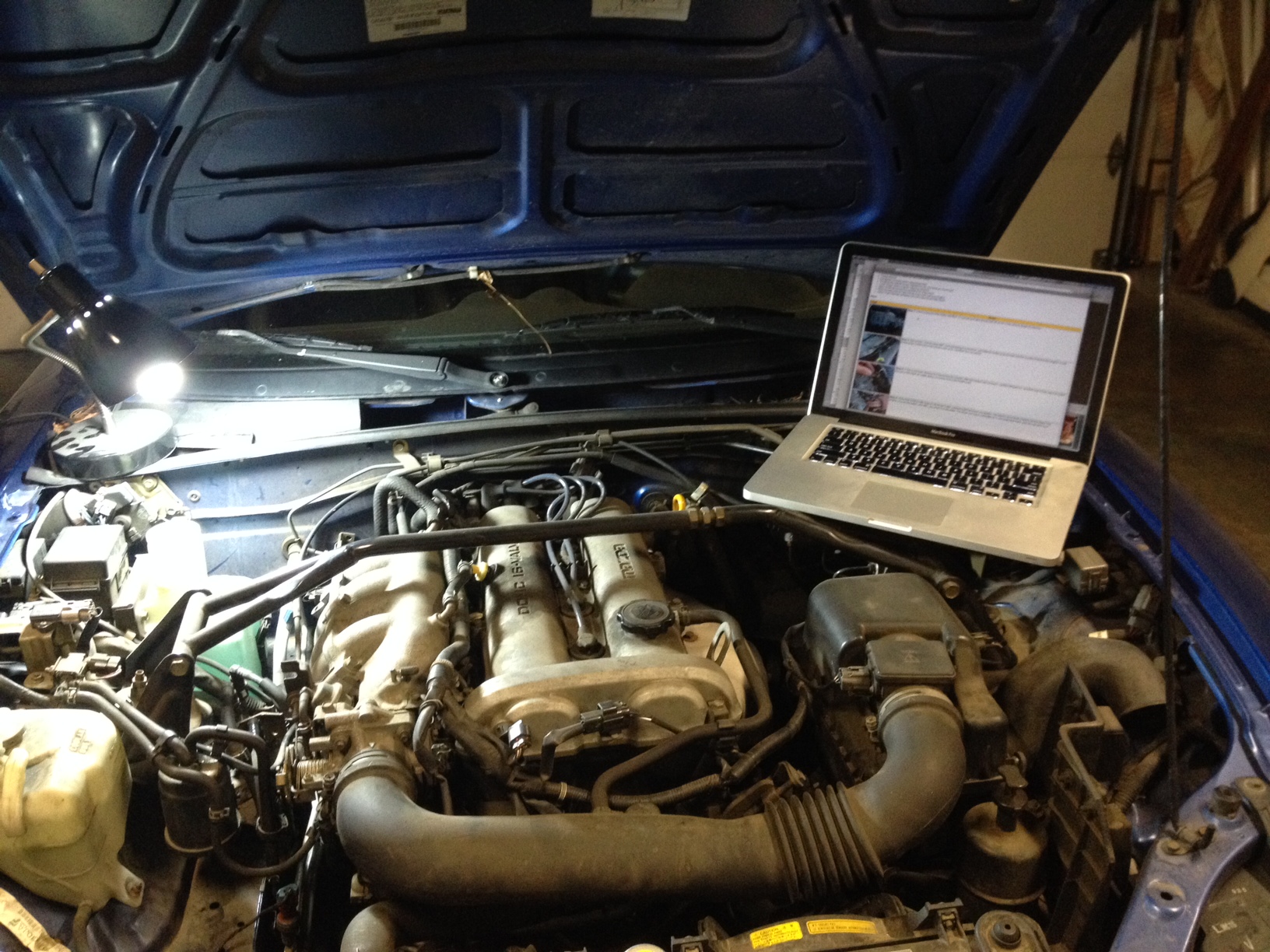
Back in the garage, with laptop propped up with the instructions for the upcoming operation, I snapped my 10mm socket onto the extender and dove in. Things went smoothly, and before long I had the valve cover off. I set it carefully aside and looked down between the valve stems, expecting to find the offending bit of rubber.

It wasn’t there.

I probed in the pooled motor oil with a screwdriver. Nothing. Nic. Nada.

Perplexed, I turned my attention to the valve cover I had removed. Where the grommet had been pushed in, there was a chamber sealed by a flat plate. Seven screws held the plate in place, and they were a bitch to get out. I peeled the plate free, breaking some sort of sealer.

There was the goddam grommet. I removed it, cursed myself, and then considered how I would put everything back together. The plate had been sealed with a dark substance; I went back online to find out what product I needed to restore the seal.

This was when I found a question on a Miata forum by a guy who had, in his words, “idiotically pushed the grommet into the motor”. Like me, he had pulled the valve cover, but he had yet to open the chamber.

“Just leave the grommet there,” was the advice. “It can’t hurt anything.” The chamber exists, you see, to keep oil from shooting straight into the PCV valve. The grommet would be just another obstacle. This would have been really good to read before I tried to fix my blunder. Too late now, though; the chamber is open and must be resealed. Happily in that same discussion was advice that addressed my condition. The right sealant to use (probably unimportant since the chamber is open on one end anyway), and a strong caution about the seven screws. If one of those works free it could destroy the engine. The proper adhesives are called for.

So, another trip to the friendly and knowledgeable guys at my local AutoZone later, I began the reassembly. It went well, with only a (hopefully) minor hitch. My car has a big stiffener bar that reaches across the engine compartment. (The bar was part of Mazda’s “dominate autocross” package.) That bar makes it really hard to slide the valve cover into place without disrupting the complex, 3-d gasket. By now I was cursing freely, but finally I got it into place with (as far as I can tell) the gasket properly seated. Then I discovered that the torque wrench I had bought really couldn’t measure bolts as loose as these are spec’d to be. But I got pretty close, I think, and it really felt like I was compressing the gasket gradually as I turned the bolts.

So in the end my clumsiness cost me about fifty bucks and three hours of stress-filled life. Unless I have an oil leak now. One deep breath later, I’ve still saved a lot of money compared to having the original problem repaired by a mechanic. But it could have been so much easier.

2

On the Subject of Tutorials, and Why the Internet is Awesome

A while back a buddy of mine had trouble with his washer. He was pinched for cash, so he tackled the problem himself, rather than call a repair man. He got some information off the Internet before he started, not all crystal-clear, but enough to dive in.

He fixed his washer. But along the way he did something else, as well: He carefully documented each step of the process, with commentary, lessons learned, and pictures. In the process not only did he save himself a hundred bucks or more, he helped a lot of other folks as well. It’s the most-hit page on his blog (last I heard), and for good reason. Here’s the tutorial, in case your washer’s not draining.

Sidebar: It’s a little frustrating for a blogger to create an episode that’s not the main focus of the blog and have that episode take off. In my case it was “New York Sucks”. But at least “How to Fix Your Washer” has some benefit to the world at large. Lately my tutorial about setting up a LAMP stack using MacPorts has become more popular, which makes me feel better.

Let’s take a moment more to understand why my friend’s blog episode was so effective. First, there was the voice: “I’m just Joe Homeowner with a couple of wrenches and a mysterious machine that’s not working right. But I fixed the bastard.” Second, the tutorial answered a specific need. Third, Joe Homeowner was there with you every step of the way, with pictures and the kind of observations that never appear in service manuals.

The most effective reference materials are almost never videos. When I’ve got both hands tied up with the task, I just want to be able to look at the screen and see what I need to know. I want a still image I can absorb at my pace, and look for reference points to reconcile with what’s in front of me. I want to read the instructions three times without having to rewind.

This is the sort of content ‘they’ were thinking about twenty years ago when they were trying to convince us that the Internet was a good thing.

Last weekend I benefitted from a similar tutorial. Owners of 1999 and 2000 Miatas know code P0402: Excessive EGR flow. Usually a P0401 comes first. It’s a design flaw; there’s a narrow passage in the intake manifold that gets clogged. The killer is that the ol’ 402 suggests that a $200 part needs to be replaced. Actually, that’s almost never true in this car. All you have to do is remove the throttle body, take off the top part of the intake manifold, and clean that passage out.

Reference material close at hand, I'm ready to fix my car.

Reference material close at hand, I’m ready to fix my car.

The task is not difficult, but it can be intimidating. What you need is some guy like you who’s done it, who took pictures, who remembers the details, and isn’t afraid to admit he was a little frightened going in. You can feel his satisfaction as you read the how-to and you know you will feel that way too.

The ONE THING I wish he might have mentioned was “when you take the age-hardened hose off the top of the intake manifold, be careful not to break the PCV valve.” But that’s a topic for another episode.

There’s a tutorial out there for almost everything. Almost. Next time you’re facing a task, if you can’t find a good set of instructions on the Internet, do the Web a favor. Make the first tool you pick up a camera. Take a little longer on your repair, record each step, and remember your moments of uncertainty and how you dealt with them. Put it out there and make the world a better place.

2

How to Make a Geek Happy

I once explained in great detail why HTML is the worst thing that ever happened to the Internet. In that episode I was a bit disingenuous — I also snuck in flaws with the protocol that delivers most of that HTML rubbish to your computer: HTTP.

Finally, finally, twenty years later than necessary, the tools are available to make Web applications work like all the other apps on your computer. (If you’re willing to set down your browser, World of Warcraft and its predecessors have been doing this for a long time now. But finally we can have good application design through the browser as well.)

While the primary benefit of this revolution is for the engineers making the apps (whom you as a user have to pay eventually), there are tangible benefits for Joe Websurfer as well. Mainly, things will work better and be snappier. You will curse at your browser about 30% less. (That number brought to you courtesy of the dark place I pulled it from.)

I work in a blissful world where my stuff doesn’t have to work on older browsers, and especially not on Internet Explorer. That means what might be ‘bleeding edge’ for most Web developers is merely ‘leading edge’ for me. I’m starting a new Web application, and it won’t use HTTP. It won’t even use AJAX.

Quick description of HTTP:
Your browser asks the server for something. The server gives it to you, then forgets you ever existed. This is especially crazy when you want your connection to be secure (https), because you have to negotiate encryption keys every damn time. That’s huge overhead when all you want is the user’s middle initial.

And what if something changes on the server that the page showing in the browser should know about? Tough shit, pal. Unless the browser specifically asks for updates, it will never know. Say that item in your shopping cart isn’t available anymore — someone else snapped up the last one. You won’t know your order is obsolete until you hit the ‘check out’ button. The server cannot send messages to the page running in your browser when conditions warrant.

Lots of work has gone into mitigating what a pain in the ass that all is, but the most obvious solution is don’t do it that way. Keep your encrypted connection open, have each side listening for messages from the other, and off you go. The security layer in my new app is so much simpler (and therefore sturdier) that I’m going to save days of development. (Those days saved will go straight to the bottom line at my company, since I’m an operating expense. The effect of my app will also go straight to the bottom line, as I save other people time and energy. Better yet, the people who will be made more efficient are dedicated to making the company more efficient. Those days of development time saved go through three stages of gain. Shareholders, rejoice.)

So, that makes me happy. Web Sockets, event-driven servers, a chance to create the Missing Middleware to make the tools out there fly. Bindings over the wire.

Of course, I’m not building it all from scratch; I’m using and improving tools created by those who have gone before me into this ‘software working right’ revolution. It means picking up a whole toolbox at one time, from database to server to client library to extensions of all of the above. There are times while I’m trying to put it all together that it feels like my head is going to explode. In a good way.

But boy, the difference a good book can make. In technical writing, there are two kinds of documentation: tutorial and reference. Mostly I gravitate toward reference materials: I have a specific question and I want to get a specific answer. References are raw information, organized to allow you to get to the nugget you need. Tutorials are training documents; they take you through a sequence to help you build complete understanding of a system.

There are many technical documents that try to be both, or don’t know which they are. We call those docs “shitty”. Then there are videos. SPARE ME THE FUCKING VIDEOS. Videos as a reference: completely worthless; videos as a tutorial: rarely adequate – what was that again?

(I’d be interested to hear from my formally-trainied tech writer pals about my above assertions.)

Anyway, On the client side I’m using a library called Backbone, and on top of that Marionette. I like them, but I was starting to get lost in the weeds. The reference material is pretty good, but getting an overall understanding of how the pieces worked together was slow and frustrating. Too many new ideas at once.

So I found a book endorsed by The Guy Who Made Marionette (yeah, The Guy. One guy, having a huge impact on the next generation of Internet applications. Could have been anyone, but there had to be The Guy.) that not only puts the pieces together, but introduces best practices and the reasoning behind them along the way. It may well be the best tutorial-style documentation I’ve run across in this industry. So, hats off for Backbone.Marionette.js: A Gentle Introduction. This book really helped me get my ducks in a row. My fastest learning curve since Big Nerd Ranch oh so very long ago.

So all that makes me a pretty happy geek. Lots to learn, Web applications built right, a new project with lots of creative freedom. And while I’m coming up to speed on the new tools, I already see gaps — the tools are young — including a potentially ground-breaking idea, that I will get to explore.

Can you believe they pay me to do this?

1

Helpful Tip for Those who wish to Submit Work to The Poetic Pinup Revue

Thinking of submitting photography or poetry to the revue? Please take the time to acquaint yourself with the following table:

Followed the submission
instructions?*
No Yes
Submitted material that matched the theme for an upcoming issue?** No Submission ignored*** Submission rejected
Yes Submission ignored Thank you!

Note that the green box doesn’t mean you will be accepted, it means you have a chance. Those other boxes — no chance at all. So go back and take another look at the table. Know it. Live it.

* For example, the part about release forms. They’re REQUIRED. And you don’t submit via Facebook. We’re not going to go look at your site. The submission instructions exist for a REASON. Pro up, buddy!

** Yes, the issues have themes. If you don’t swing by The Revue to check the upcoming themes, you’re wasting your time.

*** “ignored” means we won’t even bother to look at it before rejecting it — unless it’s so far off the mark we pause to mock it before sending it (and your credibility) into the electronic waste bin.

NaNoWriMo Coming! (Your help needed)

Yep, November is barreling down upon us, and it’s time to write another crappy novel in 30 days. I don’t think I’ve ever needed it more. I’ve also never felt less inspired. Those two facts are, of course, related.

Usually by this time I have ideas fighting in my head to become The One. This year, cue the crickets chirping. I have never felt so empty of ideas.

Which brings me to any readers who might happen by here. (Yeah, I know I haven’t given people a reason to be regulars lately.) Leave a suggestion in the comments. Don’t be afraid to be outrageous, or silly, or deep and heavy if you want. If anyone posts a suggestion, I WILL WRITE IT. Just like that. If more than one person leaves a suggestion we can have a quick vote, or I’ll let an impartial third party decide, or maybe I’ll just mash them together if the result would be amusing.

I’ll let the person with the winning suggestion read the result, though it’s NaNoWriMo — that may not be much of a prize.

1

Baseball Playoff Fever

As I type this, Cleveland and Tampa bay are playing a single game to see which team gets to be in the playoffs. (Technically this is a playoff game, but don’t be fooled; it is a contrived spectacle that rewards mediocrity.)

Out there somewhere is a Tampa Bay Rays fan on the edge of his seat, living and dying with each pitch, as his team battles for a spot in the postseason. But there’s only one. The networks are not rooting for Tampa Bay.

Call Me Badass

The other day I looked in the mirror after I had been driving. I was still wearing my hat and shades, and I had to laugh. With my too-long-untrimmed beard I looked like, well, not me.

Yeah, not so much a mild-mannered geek as a stereotype from from central casting to be in the background for a scene in a “rough” bar. (Which, in fact, I was once paid to be.)

There are other shots in the batch that don’t make it obvious I was using shoot-through umbrellas (you can see them pretty clearly in the glasses), but I chose these based on different treatments of the light, and for my expressions. It’s a slow process when you have to stop and go behind the camera to see how a shot worked, then getting back in front and duplicating your head angle but altered just a smidge. So getting the reflections under control never really happened.

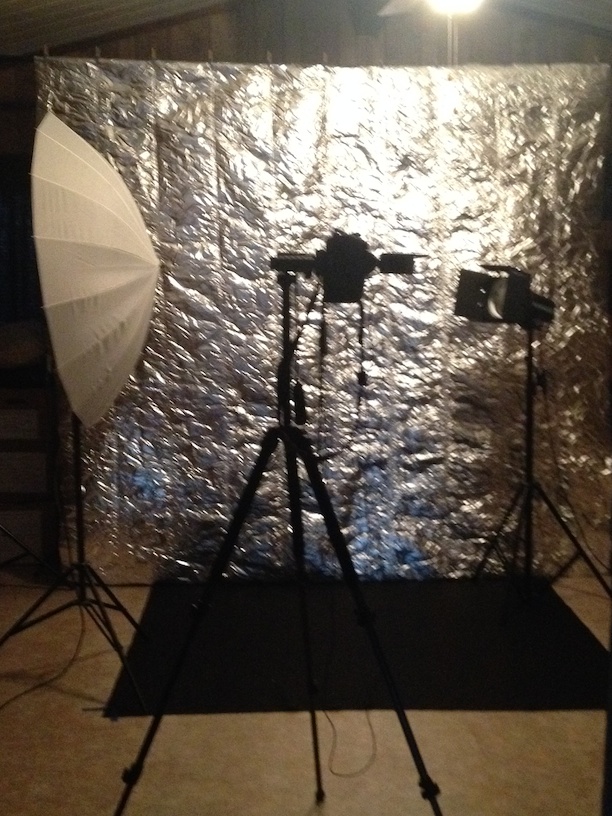
By the way, the background for those shots is a sneak peek at the shoot I’ll be doing with Harlean (who is a fiction) this afternoon. A shaky phone-camera look behind the scenes:

The set for today's shoot.

The set for today’s shoot.

2

Health by the Numbers

You’ve probably heard by now that weight is an important factor in overall health. For the first time in the history of multi-celled animals on this planet, too much weight actually kills a lot of folks. Until a century ago, fat saved a lot more lives than it took.

Here are some weight-related measures of a person’s health:

  • weight
  • Body Mass Index (BMI)
  • waist-to-height ratio
  • serum aminotransferase

Amino-what-what-what? I’ll get to that shortly. Let’s look at the others, first.

Weight as a simple number of pounds does a poor job indicating health. One human may weigh 200 pounds and be far healthier than another person of the same weight. BMI is a fairly complex formula that tries to create a reasonable scale relating weight to height. My BMI is currently a bit on the high side, but not by much.

The problem is, height isn’t the only variable when it comes to figuring out how heavy is too heavy. BMI assumes a certain shape of person, and I suspect it’s based on a weight distribution more typical of females. Skinny-leg men with big bellies can fool themselves with BMI because the weight is not distributed evenly over their bodies. It’s concentrated in the gut, which is far more harmful than fat on the thighs.

So for me, a more meaningful measure is the ratio of my height to my circumference. It’s a simple measure, and in my case, the news there isn’t so good.

My advice to people assessing their weight as a component of their overall health: Choose the system that gives you the worst news. That’s probably the number you need to address.

Much different is the last measure in the list above, and it’s more important to me personally than it’s likely to be for you. The amount of aspartate aminotransferase and alanine aminotransferase in one’s blood is related to fat on the liver. That is, of the sixty extra pounds I was carrying last March, it was the few ounces of that fat in my liver that were harming me the most. I could lose only those little fat bubbles and be far healthier, even at the same weight.

So last March my numbers were:

  • Weight: 198 lbs. (or thereabouts – didn’t have the good scale yet)
  • BMI: 30 (borderline obese; normal is < 25)
  • Waist-to-height: about 0.68 (didn’t measure at the start, but this is very not good)
  • aspartate aminotransferase: 290 (normal is < 40) (!)

So if raw weight is such a flimsy indicator of health, why do we hear so much about weight everywhere we turn? The answer: It’s really easy to measure. So I use the least meaningful measure of health to set my goals. A pound a week. (Pound 172 took substantially longer. I hated that pound. Week after week I cursed that damn pound.)

Today my numbers are:

  • Weight: 170 lbs.
  • BMI: 25.8 – getting close!
  • Waist-to-height: 0.62 – ok, not so close. Can’t hide from this one.
  • aspartate aminotransferase: normal!

You see that last one? That, my friends, is weight-loss success. I still have some work to do, but dang if that’s not validation. An important part of my 50th birthday present to myself.

Also, when I hug my sweetie, I feel closer to her. Probably because I am closer to her. And her arms go all the way around me, with extra for squeezin’.

4

Oh, Shit

While I put the finishing touches on a truly fascinating blog episode, a pep band is setting up directly behind me. There is a sousaphone, trumpets, drums, and all the rest. Even Cheerleaders. Who are we? “Spartans!”

And now they’re playing.