Moving to California hasn’t affected me much…
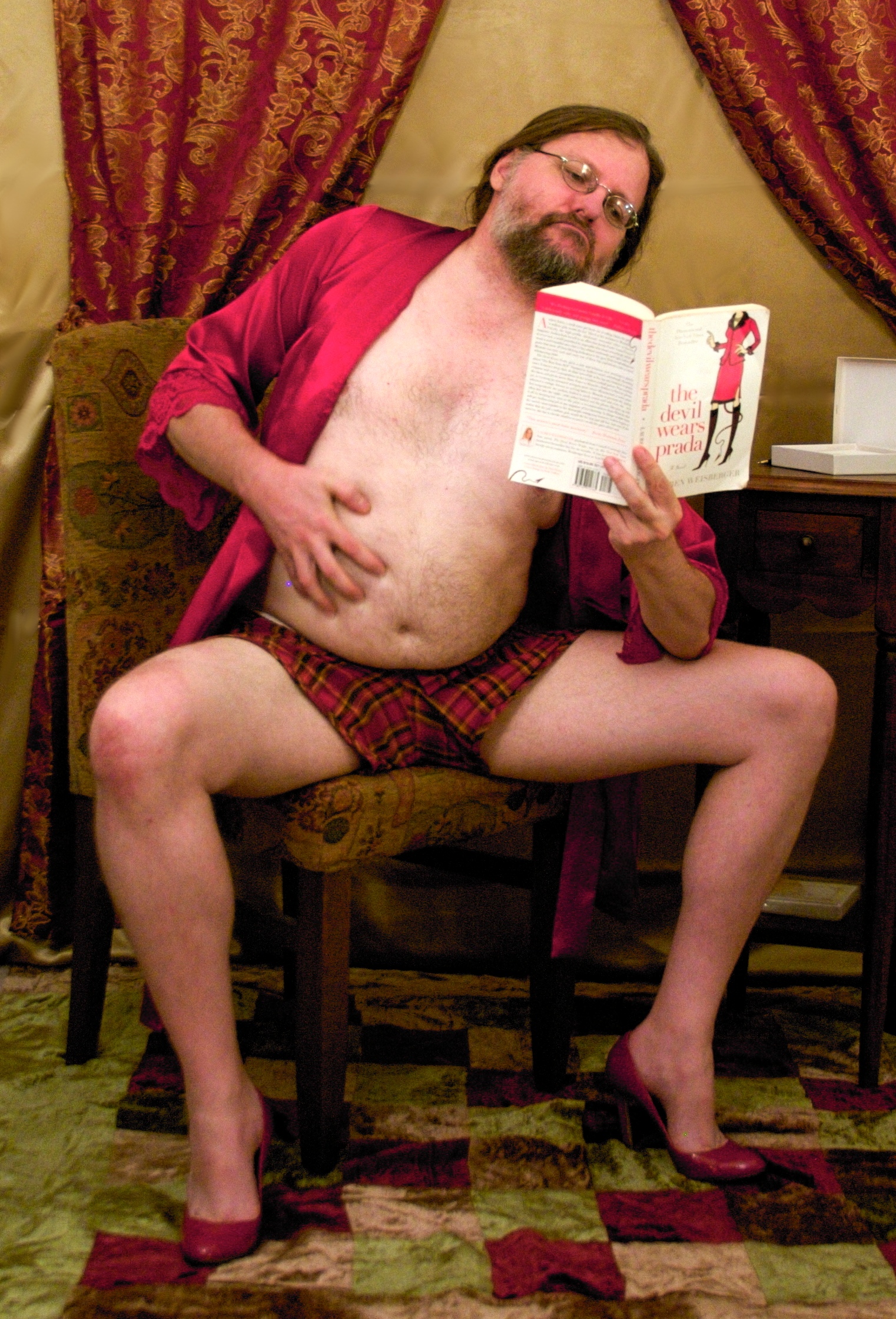
There are a lot of vampire stories out there right now, most of them occupying the Ann Rice (with Buffy Extensions) World. Rice, I suspect, as primary architect of the AR(wBE)W, is justifyably proud of the impact she’s had on mainstream literature, as writers of every skill level have adopted the AR(wBE)W — some to add interesting twists on it, others because they aren’t inclined (or able) to come up with a world of their own.
But is that really the world vampires would build?
Let’s say you’re a vampire, oh, around the time of the ancient Greeks. Give or take. You have been around for a while, much longer than the fleeting human lives that surround you, and you understand that now you are a fundamentally different animal. A more evolved species. What do you do? Do you run out willy-nilly and vampirize the cheerleader squad and the buffest dudes?
Probably not. You would probably be very selective about who you invited in to your immortal fraternity, choosing the best and the brightest that humanity had to offer. Centuries pass. Your cabal now holds the greatest minds, and preserves lost knowledge. You are part of a secret cult that weilds immense power, subtly. Things are going pretty well, but there’s one problem. People. Those clever little bastards are getting better and better at killing each other, and killing your kind. You see the day coming when everything will change.
Let’s call that day the Victorian Era, a time when Learned Men spoke of the Triumph of Reason over Superstition. Scientific method and exploration are turning the mysterious into the Known at a dizzying pace, and a technology boom looms close behind.


The Delicate Dependency
That’s when the vampire comes to live at his house. Dr. Gladstone wants to study the creature. There is nothing that can’t be explained, after all. His teenage daughter Ursula has other ideas. Yet when the vampire leaves suddenly, it is neither Ursula nor the virus he takes with him.
He has even warned his host: Nothing the vampire do is as it seems.
The language of the book feels authentic to the period, and reads right along. One thing I noticed: adjectives. Lots and lots of them. Dr. Gladstone would never lay something on a desk, he would lay it on an oak desk with teak inlay and gold trim. Rarely is does a bit of setting escape unadorned, even if it’s the third reference to the object. I think this is deliberate on the writer’s part; the good doctor has an eye for the finer things in life and when details of craft or workmanship catch his eye, he will report them faithfully. He is an object-oriented person.
The prose takes its time moving through the story, and much of the action is intellectual, as clues and mysteries mount up. There is a rip-roaring chase or two, however, and you can feel the breathlessness of the characters as they dash for survival. This is a fine read, a story well told, with plenty of surprises and twists along the way.
Note: You’ve really got to want this one, as dealers are asking huge prices for used copies, but as always if you use the above link to buy this book (or a Kindle
Last night I wrote a review of a book. I was pretty pleased with the results. It actually talked about the book for a while. This morning I tweaked it a bit and hit post.
It vanished.
Well, mostly vanished. The title was there, as was the little blurb at the top. Everything else was gone. “Poop!” I said (or something like that).
I use ecto to compose my larger blog episodes; the offline editor is much nicer than any in-browser editor I’ve encountered, especially on my 8-year-old laptop. I don’t call it Ol’ Pokey for nothing. Plus there are times I want to write an episode but the Internet is nowhere in sight. ecto has been working very well for me. Except when it loses my work. This is the second time, but somehow this one hurt more. Also, ecto was recently bought from the original developer and seems to be stagnating.
“Looks like it’s time to give MarsEdit a serious look,” I said, and downloaded the latest. I fired it up and was greeted with “Your trial period has expired.” Dang. I’d launched it once when comparing ecto and MarsEdit back in the day. MarsEdit was missing a particular feature (don’t remember exactly what) and that made ecto the winner. Before it started losing my work.
Lots of people like MarsEdit (lots of people like ecto, too), but am I willing to pay for it without writing a single episode with it? That’s hard to justify. I’m downloading a program called Qumana to rewrite the book review with. We’ll see how that goes.
Edited to add: Nope. Qumana didn’t work. At all. I checked the system requirements, and it should work. But it doesn’t.
While watching television a couple of nights ago, I saw an ad for the new Windows 7, code-named “all the stuff we wanted to put in Vista but ran out of time.” After the ad was over I turned to my sweetie and said, “I know there’s a joke about the significance of them using the theme for The A-Team in the ad, but I can’t think of it.”
After perhaps a second of reflection she said, “How about, ‘We get the job done but there might be a lot of explosions first.'”
I laughed, thought for a few seconds, and ventured, ‘There will be a lot of shooting, but no one will be hit.’
Obviously my sweetie is funnier than I am.
Although my first entry was not good enough to place me in the top one hundred, I decided before the competition started that I would do the following rounds whether or not I was still in the running. Tonight my resolve was sorely tested, but my head has been in geek-space too much lately, so the chance to do a writing assignment seemed like a good idea.
That’s not to say that I put a whole lot of effort into it, however.
Here’s the new premise:
Your PROTAGONIST’S allies have turned on him (or her.) His reputation is now in tatters, largely due to his own screw-up — which has been magnified and broadcast by the ANTAGONIST. Write the scene in which the protagonist tries to win the allies back. The scene should include a heartfelt mea culpa. You may use any setting, era or characters in addition to the ones indicated, as needed.
Although competitors have all night, I only spent a couple of hours on mine. While pondering what to write, I realized that I already have some stories that I intentionally don’t devote much time to. So here’s a scene from Allison in Anime, way out of sequence, pooped out in screenplay format for the sake of this exercise. (I played a little fast and loose with who the protagonist is, but in a good story everyone thinks they’re the protagonist anyway.)
For those who aren’t familiar with my little exercise in logorrhea, Allison in Animeland is a spoof of Japanese cartoons in which an American girl finds herself in a Japan where all the strange conventions of anime are actually true. In this Japan, transfer students ALWAYS turn out to be more than they seem, and the destruction of entire cities is routine, as are exclamation points. This scene takes place quite a bit in the future from any published episode and uses several characters who haven’t even been named in the main story yet.
Now there’s Google Chrome Frame, or at least the glimmer of it in the future. Google’s spin: since Internet Explorer is holding back the Web; we’ll make a plugin so people can use our more standards-compliant browser technology from within Internet Explorer.
It seems nice on the surface and I’m happy that someone would go and fix Internet Explorer despite Microsoft, but I have to wonder how many people will actually install the plugin. The people who are using IE now are ones who either like IE as it is or who must use IE because their IT department says so. Will the first group see value in adding a plugin to make their browser work like another browser (which they just as easily could be using already), or will IT departments allow their ‘clients’ to install such a large unknown quantity on their machines?
The thing is designed so that the WebKit code (what Chrome is based on) will only be invoked on Web pages that specifically enable it. (This might help the IT guys relax a bit.) I will enable it for this site, although the differences Chrome Frame users will see are only cosmetic. It costs me nothing. Somewhere the Google minions will make note of my Chrome enabilization and use that as part of a marketing pitch.
My hope for the plugin is not that it converts a lot of Internet Explorer users, but that it spurs Microsoft to accelerate their own adoption of the next wave of standards. That would be the biggest win from where I’m sitting. It doesn’t seem likely, though, until HTML 5 becomes a valuable tool for its business customers.
Whether it’s Bing making Google Search better or Chrome making Internet Explorer better, in the end I’m glad these two companies don’t get along.
I was watching television this evening and there was a commercial for a car of some sort. In the ad a giant claw descends with a crash and lifts an old junker up into the air. From underneath the crappy car a shiny new car drops.
At the bottom of the screen, in fine print: Do Not Attempt.
I finally got my score back from round one of the Cyberspace Open and I think it’s unlikely that I will be (officially) advancing to the next round.
For reference, you can read my entry here. This is the review in full, with the reviewer’s ID and my email addy redacted:
Total Score–Calculated: [21+20+21+21]
Reviewer ID number:
Writer’s Name: Jerry Seeger
Writer’s Email Address:
Structure Score: 21
Dialogue Score: 20
Style Score: 21
Originality Score: 21
Judge’s Comments: The scene has a nice energy to it throughout, though the action feels a little hackneyed and familiar. The relationship between Tommy and Lenore is interesting but it never really becomes something easy to invest in. The dialogue is a little talky and the writing a bit wordy. Try not to open a scene with a large chunk of description – ugh! Apply the 4 line rule throughout (no more than 4 lines of description at any one time). A slimmed down writing style that shows rather than tells – using as few words as possible – would help to bring out the inherent drama and suspense. Less is often more! Good luck.
I knew some of this criticism was coming; the ‘hackneyed and familiar’ part was the subject of a previous lament in a comment somewhere. I failed to break the two out of the ‘modern Bonnie and Cyde’ mold and give the two their own identities. A pity. The opening wordiness demerit is a bit frustratiing; I had put in extra stuff to set the context of the scene better (in an actual script you’d know about the GTO already, for instance), and normally character descriptions would not happen there. They would have been taken care of long before.
As for the wordy dialog, there’s one phrase, “You got some drivin’ to do,” that I really dislike now, but I think the two are talky people. Once again without context the mercurial conversations don’t make as much sense. It goes back to me doing a better job establishing who these people are in the first few words. I failed at that.
Still, I think it’s a fair score and the comments are things I can definitely learn from as I work on other things.
Will I go on to round two? I have to admit that I’m pretty pessimistic on that front. I expect I’m firmly in the middle of the pack of competent entrants, but I think it’s going to take a little more than that to move on. Only time will tell, however, so keep your digits crossed!
As the end of judging nears, I still haven’t received my score. Is that a good sign? Does it mean they are holding back the top candidates so they can sort out the best 100 after their first pass? Do they want to announce the winning scores all at once? Or is it that since I submitted a long time before the deadline I’m at the bottom of the virtual pile, unread?
No way to tell.
However, while I can think of positive reasons my score announcement might be delayed, I can’t think of any negative ones — unless they lost my entry, but I think we’d be able to work that out. They’ve been quite reasonable with other folks who have fallen to technical glitches. So: only good reasons for them to delay telling me my score. Most likely they just haven’t got to me yet. No reason to fidget.
Except that I’m a writer, and I’m bound by the Writers’ Code to be neurotic about stuff like this.
-webkit-. In the following discussion, using the standard syntax will work with Chrome, Safari, and Opera as well. The table referenced below has been updated to reflect the newer browsers.If you poke around this site you will see boxes with rounded corners. If you use Safari or Firefox, you will see even more.
Rounded corners are implemented here in two different ways. The main boxes with the drop shadows are done the old-fashioned way, the way that works on most browsers. Each corner is a graphic with an alpha-channel shadow, and the edges are yet more graphics, repeated as needed to span the distance between the corners. The boxes expand and contract infinitely in both directions. It’s not bad. It’s also a pain in the butt.
Yet, I like rounded corners. They seem friendlier. I have broken down, therefore, and in a few places I have added browser-specific style information to create a softer-feeling blog. Since the rounded corners are purely cosmetic — everything still works just fine in browsers that don’t support border-radius — I’m not too worried about it.
However, while I was looking into the border-radius CSS property, I discovered several sources that didn’t get it right.
Here’s the deal. The CSS3 standards draft includes a property called border-radius. Exactly how that property is going to work has not been finalized, but it’s not likely to undergo any more major revision. Meanwhile, Firefox and Safari have already worked out their own border-radius implementations, called -moz-border-radius and -webkit-border-radius respectively. Other browsers see the -moz and the -webkit prefixes and ignore the property.
Unfortunately, neither implementation matches how the proposed border-radius property will act. Oh, dear. When the browsers are updated to match the standard, those -vendor-border-radius properties may break. A lot of Web designers out there don’t seem to realize that.
NOTE: probably at this point you should open up this handy table to follow along.
It’s not all doom and gloom, however. As long as people using the vendor-specific border-radius properties keep things really simple, there won’t be a problem. Here’s the skinny:

will put a nice rounded corners on any block element of class roundedBox. Safari 4 and Firefox 3.5 (the browsers I have to test on) will work today, and when the formal border-radius is adopted and the other browsers support it, everyone will be happy. (Remember, of course, that in the meantime a large part of your audience will still see squared-off corners.)
The tricky part comes when one wants to specify elliptical corners, or specify different radii of curvature on different corners. When you start getting fancy, things get a little messed up. Let’s tackle the second one first, because it’s possible to find a way to specify the different corners that makes everyone happy. It’s just long-winded.
border-radius is really shorthand for four properties: border-top-left-radius, border-top-right-radius, and so forth. Therefore it’s perfectly safe to specify each corner independently, and all the browsers will act the same way:

Note that the names of the four corner properties are different for Mozilla. Aargh. All the more reason to hope the spec is finalized soon. I put the four properties in the order the software considers them when parsing the shorthand notation, just to get into the habit.
All those lines of CSS can be a pain in the butt, but it’s bulletproof and will work on into the future. But wouldn’t it be nice if you could use shorthand for the border radius the same way you do for margins and padding? The boys at Mozilla thought so, and the CSS3 standards team thought so, too. Webkit (Safari) seems content to only support the long-winded method for now (at least support it properly – more on that later).
Before talking about the differences between the browsers and the CSS3 spec, let’s take a quick look at the theory. As with properties like border, the border-radius property is just a shorthand so you don’t have to specify each corner individually. If you use one number, like border-radius: 10px; the style will be applied to all the corners. If you supply four values, the four corners each get their radius set, starting with the upper left and working clockwise. So far, so good, but there’s trouble ahead.
[The following has been edited since it was first published. I first said that Mozilla was doing the following drawing wrong, but it looks like they have it right and Safari is wrong. Sorry for any confusion. To make up for it I added box-shadow here and there for browsers that support it. They’re sweet!]
The difference is elliptical corners. CSS3 calls for them, but the draft isn’t very well-written. The mystery lies in what should happen when two values are specified: border-radius: 20px 10px. When you are specifying a single corner, the result will be an elliptical curve. When using the shorthand, however, Safari draws all four corners with the same ellipse, but Firefox (and the CSS3 spec) draw round corners that turn out just like the example above.
According to the spec (by my reading), when using shorthand if you don’t use slashes you don’t get ellipses.

NOTE: The most recent builds from webkit.org match the spec. I don’t know when those changes will reach Safari, but sites using the two-value shorthand may have to deal with some inconsistencies between browser versions. Not sure, but I would avoid using that syntax just in case.
What about if four values are specified?

Once again Webkit-based browsers like Safari and Chrome fall short. The Webkit team seems content to get the longhand method of specifying corners right, but not the shorthand. Mozilla, in the meantime, has worked out the most complex and versatile form of the shorthand, but disagrees with the spec fundamentals.
To use shorthand to specify four different elliptical corners, you would use something like:
-moz-border-radius: 20px 10px 20px 5px / 5px 10px;
where you specify up to four horizontal radii and then up to four vertical radii. The numbers before the slash are the horizontal radii, starting from the top left. If only two numbers are given, they alternate. Three numbers means top-right and bottom-left share. The y-radius values are the numbers after the slash, and are distributed the same way. Clear? Good.
I have read that if the text rendering is vertical, the horizontal and vertical parts are reversed, but I see nothing about that in the proposed specification.
This will make a lot more sense if you study the twoblue-shaded lines of the table.
While we’re looking at the table, note that Safari is perfectly capable of displaying the most complex borders, but they have not implemented the shorthand notation (except for the bit they did wrong). They’ve done the hard part, but left out the one-day coding job of parsing the shorthand strings into the properties for each corner. Odd. The rules are really very simple for a machine.
So what does this all mean?
In conclusion, while it’s possible to write different sets of -vendor-border-radius CSS properties and get what you want, things start to get quite messy. It’s a lot of effort for aesthetic touches that half your audience won’t see for the next couple of years. I’d advise just staying away from elliptical corners for now, and specifying round corners individually if any are different. It’s a bit more typing, but it’s a lot safer. Stay away from -webkit-border-radius: with two values.
I wrote this scene over the course of two days, and I stopped myself before I edited all the fun out of it. (At least, I hope I did.) Lenore and Tommy seem to be in a heap of trouble, but can they even trust each other? The scene that comes after this one is awesome, if unwritten.
As a reminder, here’s the premise:
Your PROTAGONIST is in a jam. He (or she) had been relying on deception in order to further his objective, but his ENEMY has figured out the ruse. Write the scene in which your protagonist’s LOVE INTEREST confronts him with this information acquired from the enemy – while in staging it in a tricky or dangerous situation.
I learned a few things while writing this… but let’s cut to the chase.
There are still several hours left before the deadline, but, well, I was done, so I submitted my entry. I just saw this message:
Seeing this screen means your entry arrived.
Finally, congratulate yourself for having the courage to say,
“I can create on deadline,” and then doing it. Yay!
There is nothing more to do; my fate is in the hands of the judges now. Let’s all keep our fingers crossed for a top-100 finish. Think positive thoughts and all that crap. I’ll be posting my entry here in a while, but I’m going to reread the rules to make sure it’s OK first.
To the rest of you still working on the challenge: You can do it! Go Team Muddle!
With nineteen hours before the end of round one in the Cyberspace Open, I’m feeling pretty good about the way it’s going, but there’s still plenty of room for improvement. I spent last night working with two of the plots from the list above. I really like the idea with the multiple personality disorders, but try as I might I couldn’t come up with a confrontation scene that could stand alone well enough to not confuse the reader. In an actual movie the viewer would already understand things that someone reading the scene cold would not know. The light of my life had a bunch of great suggestions that make the idea really intriguing, though. I’ll file the idea away for another time, when I’m drinking beers with a producer. Green light by the third round, baby!
Meanwhile, God getting distracted while making the universe will probably end up as a short story. As a scene in a feature film it actually told too much of the story. (Unless God and his rival spend the entire time messing with each other’s universes, until one universe breaks quarantine… hmm.)
Similarly waysided are the demons/aliens/whatevers taking over the Earth. Some fun ideas there, but I never came up with that sparkling moment of conversation that sells a scene. It’s probably better as a short story, too. Finally, protagonist as a criminal is actually based on an idea my sweetie and I hashed out one night which will make a great screenplay someday. I couldn’t get all the pieces right in my head to work it for this competition, though. Later, the title alone will sell it.
In the end, it’s the car chase. I don’t know why, but that’s where my creative juices flowed with the lowest viscosity. Little moments all strung together into something fun (at least, I think it’s fun). Drivin’, shootin’, arguin’, fibbin’. Mortal danger and true love. Outlaws on a two-lane blacktop.
Meanwhile, fuego is over on his side of the Atlantic, writing away. I have no idea what he’s cooking up, but it’s sure to be good. It’s too bad he’ll have to settle for second place.
